
Apex Legends Cosmetic Removal Still Teaches A Harsh Digital Ownership Lesson
Apex Legends' pulled cosmetics expose digital ownership risks in live-service games: players pay real money for items that can vanish.
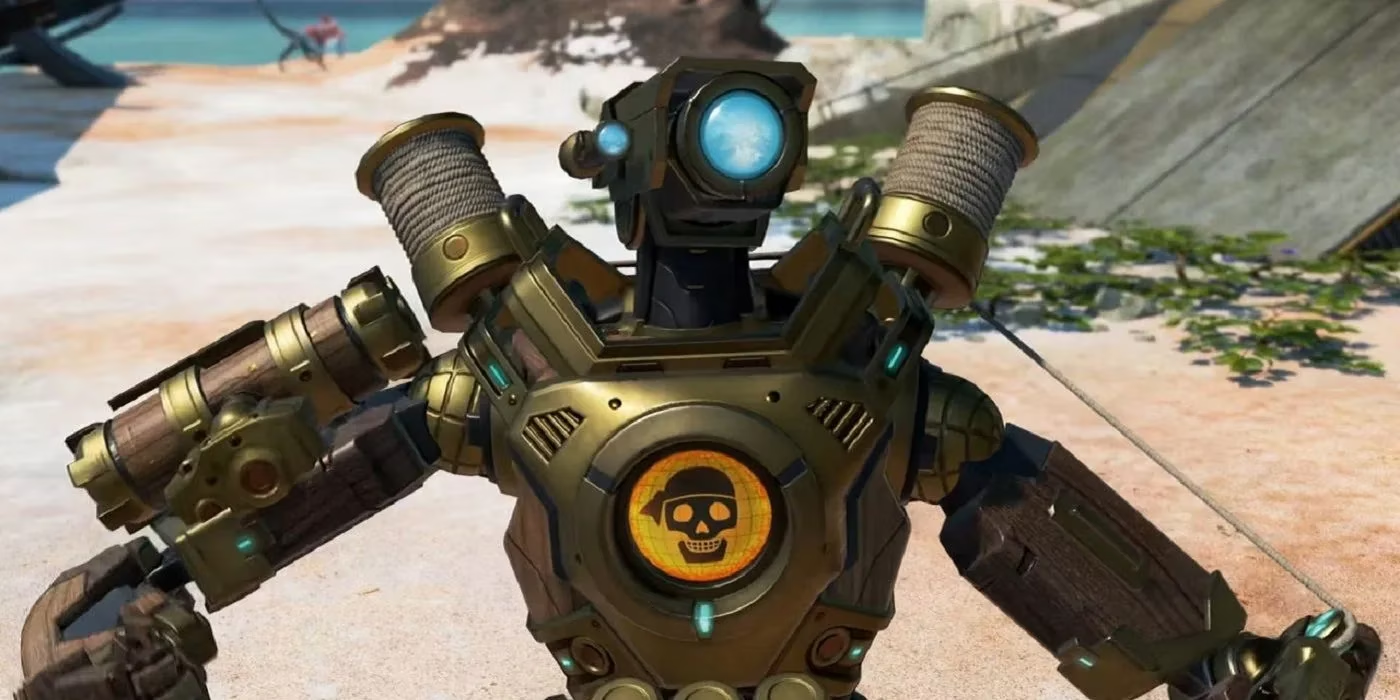
In 2026, live-service games are everywhere, and players still spend real money on digital items that can vanish with a patch. But one older Apex Legends mishap remains a perfect case study. During the Raiders event, players got a heavy dose of festive cheer. The pirate theme fit the new map Storm Point and its tropical aesthetic perfectly. Nautical cosmetics arrived alongside a snowy lobby makeover, and the returning Winter Express event came complete with snowman wallpaper and more Christmas trees than a Nordic forest.
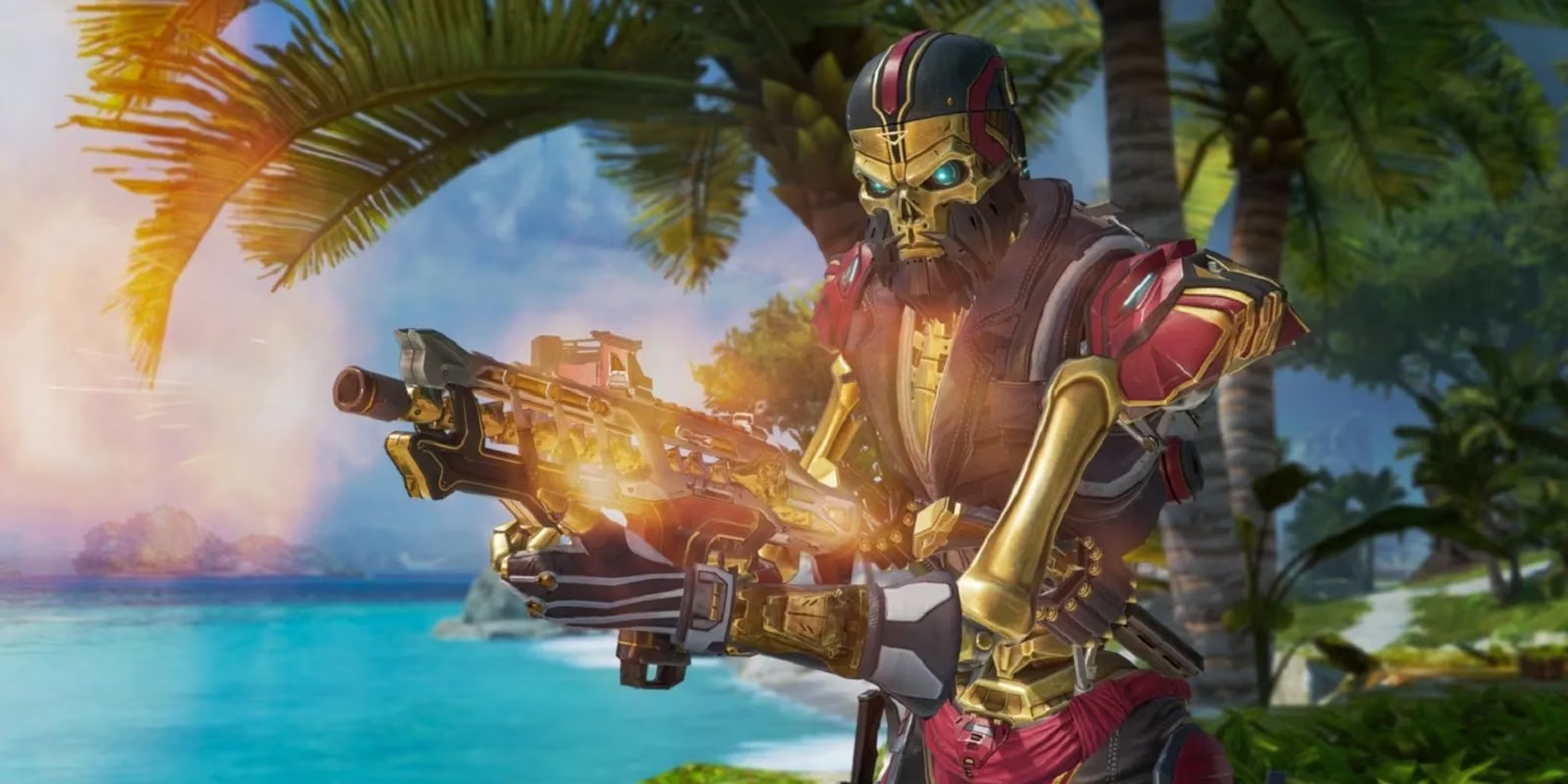
Aside from the limited-time mode, the biggest pull of the Raiders event was cosmetics. Buying every loot tick would set a player back at least 700 Apex Coins. The cheapest way to unlock all of them—and therefore unlock the coveted Wattson heirloom—would cost just shy of £130. So it was understandable that players were upset when their cosmetic rewards were taken away without so much as a word from developer Respawn.
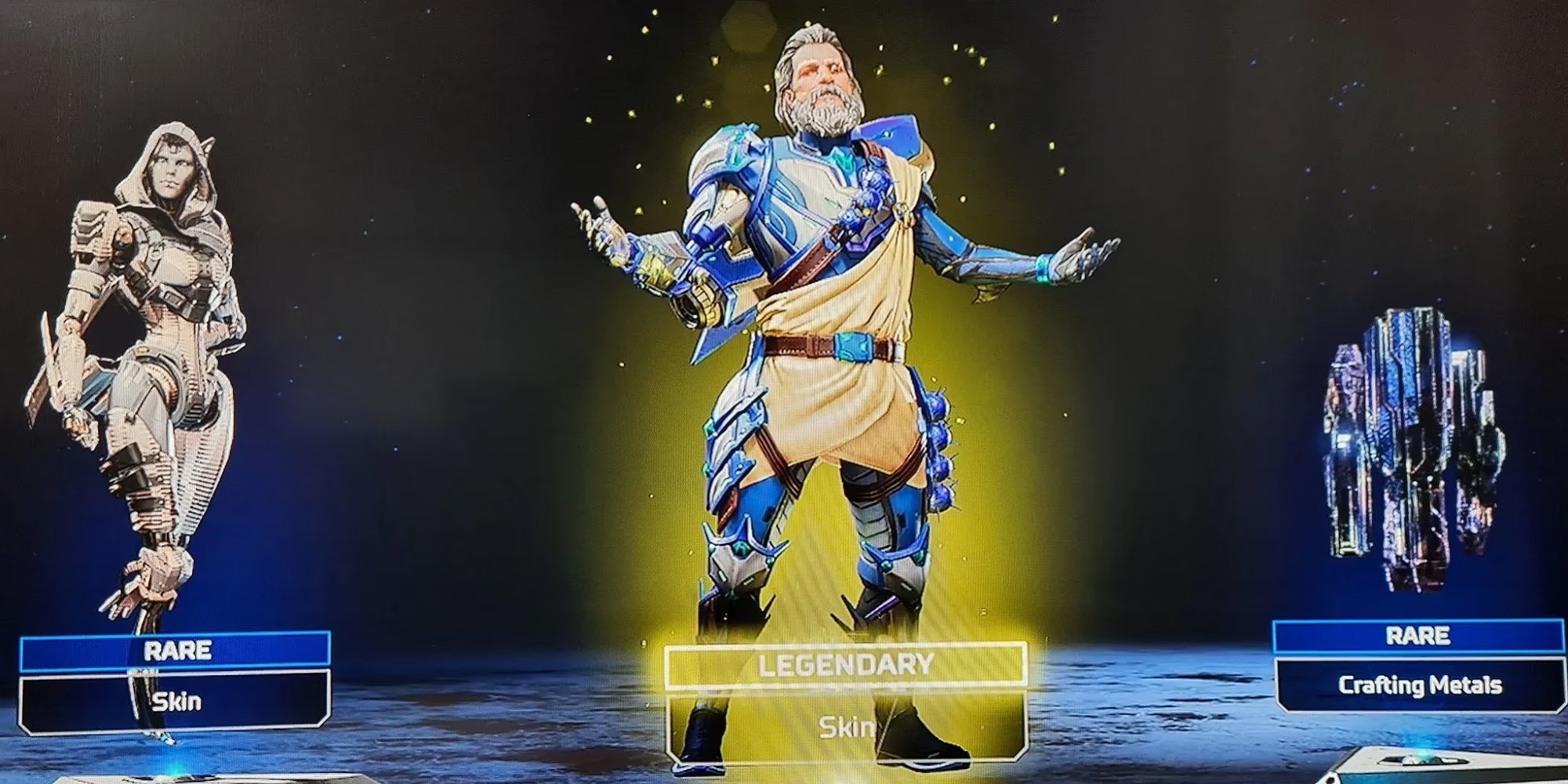
TheGamer saw proof from numerous players that they received unreleased cosmetics from event packs they opened. These cosmetics are believed to have been added in an update for an upcoming, unannounced event. Most of these players opened packs as soon as the event began. The unreleased cosmetics replaced skins and trackers from the Raiders event, which are now completely unavailable to affected players.
However, Respawn quickly removed the unannounced cosmetics from the game—including from the inventories of players who had already unlocked them. At the time, it was unclear whether those players would receive the skins and trackers again when the appropriate event began. Respawn did not respond to a request for comment by the time of publication.
That mistake invites a pertinent conversation about digital ownership. Players paid actual, real-life money for digital products. It doesn’t matter whether the products were earned through “surprise mechanics,” or that the items were previously unannounced. These items were paid for and have since been removed from the buyers’ inventories. Could this happen with other skins? Do players just rent the cosmetic items they buy? In 2026, that question has only become more urgent as games rely on rotating stores, battle passes, and limited-time events.
If someone buys a rare Pokémon card, for instance, they have the physical object. It may fluctuate in value. They may spill coffee on it and ruin it. But they have it forever. Now, before anyone goes all Ghost Recon Breakpoint and starts shouting about NFTs—no, NFTs are not the answer. Whatever your thoughts on cryptocurrency or live-service games, it’s unreasonable to believe that any current game will last forever. Developers won’t update these games forever—Ghost Recon, Apex, or any other game. And you can’t expect developers of a completely different game to code and implement your planet-destroying weapon just because you have proof of ownership.
Issues of digital ownership aren’t limited to games. You don’t own any songs you buy outright on iTunes, let alone stream on Spotify or Apple Music. Amazon recently removed all copies of 1984 by George Orwell from its Kindle Store and every device that had the novel downloaded when it realised it didn’t have the rights to be selling it. Farmers with $800,000 John Deere tractors were told by the company that they didn’t outright own the vehicles they had bought. The company still owned the software that made them run and would not allow purchasers to modify the code in order to repair mechanical issues.
We’re known as the Subscription Generation for a reason. But what happens when services revoke your paid-for goods? What rights do you have to Rage Against The Machine’s latest album or Revenant’s Blackbeard skin? Ultimately, Respawn’s decision to remove cosmetics from players’ libraries shows that we don’t truly own any of the items in our in-game inventories, despite many players spending plenty of hard-earned cash on cosmetics.
In 2026, this lesson is even sharper. Live-service games come and go. Storefronts close. Servers shut down. Licenses expire. Players may think they’re building a permanent collection, but they’re often paying for temporary access. That doesn’t mean every developer is malicious. It means the system itself is built on permission, not possession. A skin can be removed. A book can be deleted from an e-reader. A tractor can be locked by software. A song can vanish from a library. The buyer is left holding a receipt, not an object.
So, what should players do? They can still enjoy cosmetics, but they should understand the deal. They can ask for clearer labels about what they’re buying. They can support rules that require digital stores to explain ownership limits. They can remember that “buy” in a live-service game often means “license.” And they can keep talking about incidents like the Apex Legends Raiders event, because silence makes it easier for companies to treat digital purchases as revocable privileges.
We are in an era of technological feudalism. People voluntarily pay fees to hire pixels that make their characters prettier—characters they can’t even see in first-person shooters like Apex Legends. Whether someone is paying for songs from Apple, books from Amazon, or cosmetics from Apex Legends, the items they buy are impermanent. Their permission to listen, read, or wear them could be revoked at a moment’s notice. That was true in 2021, and it remains true in 2026. The only question is whether players will remember it before the next pack disappears from their inventory.