
Apex Legends Custom Games: A Revolutionary Boost for Esports and Community Tournaments in 2026
The global rollout of Apex Legends custom games has revolutionized the competitive landscape, empowering players and organizers alike. This pivotal update has democratized practice and spurred an explosion of community-run tournaments with meaningful prize pools.
As a long-time follower and participant in the Apex Legends competitive scene, I can't help but feel a surge of excitement. How many competitive Apex tournaments can the average player actually name beyond the official ALGS? If you're not deeply embedded in the scene, the answer is likely very few. For years, the ecosystem outside the ALGS has felt niche, with tournaments like those from Esports Arena or the newer Realm platform being known only to a dedicated few. For professional and aspiring players, especially outside the dominant North American region, this has created a significant problem. Prize pools for off-season events have often been laughably small—think splitting £100 between three players after organizational cuts. Is that any way to build a sustainable career in esports?
However, the landscape I'm witnessing in 2026 has been fundamentally reshaped by a single, pivotal update from Respawn Entertainment: the global rollout of custom games to all players. This wasn't just a quality-of-life feature; it was a lifeline thrown to the entire competitive community. While casual players were initially dazzled by in-game events and new cosmetics, those of us invested in the sport's future immediately saw the potential. Private matches were no longer the exclusive domain of ALGS Pro League teams for scrims; they were now a tool for everyone.
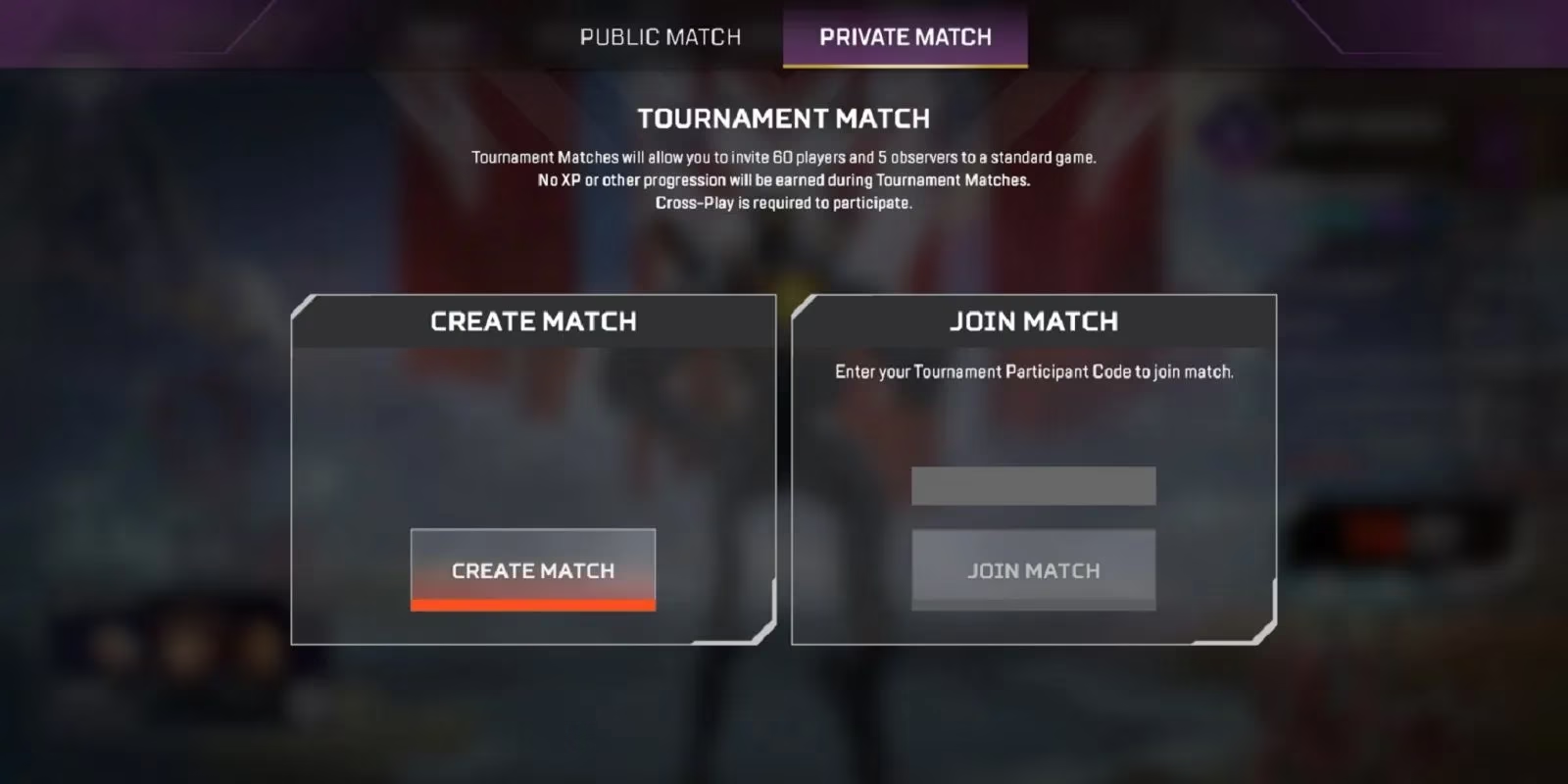
The implications for practice and competition are profound. 🎯
-
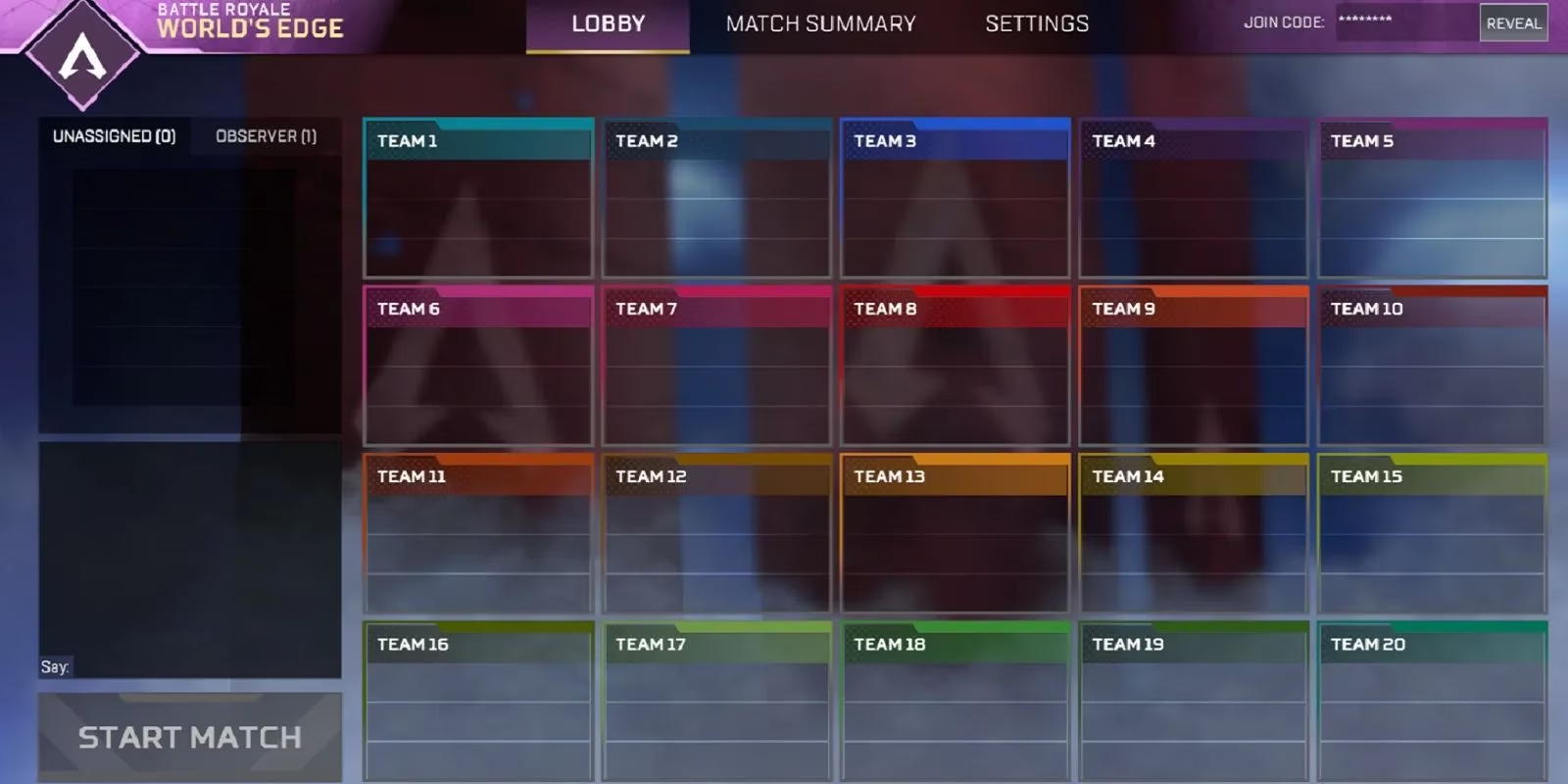
Democratized Practice: Previously, only top-tier pros had consistent access to private lobbies for structured, intense practice sessions (scrims). Now, any team, at any skill level, can organize their own. Want to run a nightly practice with five other squads from your region? You can. This levels the playing field for amateur and semi-pro teams aiming for the big leagues.
-
Tournament Proliferation: The most significant change is the explosion of community-run tournaments. Anyone can now organize an event, set a prize pool (however modest or grand), and invite players. This has directly addressed the financial desert of the off-season. We're seeing weekly tournaments with meaningful cash prizes sprouting up in every region—EMEA, APAC North and South, South America. No longer are players forced to choose between making minimum wage or quitting.
But the impact extends far beyond just player earnings. Consider the ecosystem roles that rely on a vibrant competitive scene:
| Role | Pre-Custom Games Challenge | Post-Custom Games Opportunity in 2026 |
|---|---|---|
| Casters & Analysts | Gig scarcity, dominated by a few big names for ALGS events. | A booming market for casting talent for hundreds of new community tournaments. |
| Tournament Organizers | Daunting process to secure official custom lobbies limited large-scale events. | Low-barrier entry to host events, leading to specialized tournaments for all niches. |
| Content Creators | Reliant on public matchmaking for content, which can be unpredictable. | Ability to host viewer games, creator showdowns, and unique rule-set events for engaging content. |
As caster Benjamin 'Zephyr' Fossit passionately argued when the feature launched, this was about JOBS. In 2026, his prediction has materialized. The scene has been rejuvenated, creating a sustainable pipeline for talent in every aspect of esports production.
Perhaps one of the most heartening developments has been the empowerment of marginalized communities within gaming. 🤝 Before universal custom games, tournaments for women, LGBTQ+ players, or other groups faced high barriers and frequent cancellations. Now? These communities are thriving. Women's Apex leagues, which struggled to gain traction compared to other esports, are now regularly organized and broadcast, fostering talent and representation. LGBT+ tournaments have found a stable, player-driven home. The ability for these communities to control their own competitive spaces has led to more participation, higher visibility, and a more inclusive path to the professional level.
And let's not forget the content creation boom! Apex Legends has always been a staple on platforms like Twitch, but custom games have unlocked a new dimension of creativity. Streamers and YouTubers in 2026 routinely host:
-
Subscriber/viewer battle royales.
-
Creator pro-am tournaments with unique handicaps.
-
"Friday Night Fights" with wacky rules (shotguns and snipers only, perhaps?).
This constant generation of fresh, community-driven content is a live-service game's dream, keeping the broader player base engaged and excited.
So, what does this mean for someone like me, or for you, the average player? It means more to watch, more to play in, and a healthier scene overall. I've personally competed in several small-stakes tournaments with friends and colleagues—the thrill of organized competition is now accessible without needing to be a pro. This grassroots explosion is the vital farm system that esports needs. Look at success stories like the current Team OpTic roster, which was discovered in community tournaments. With more competitions happening globally in 2026, the next generation of stars is being forged not in exclusive scrims, but in the vibrant, open arena of player-run custom lobbies.
Is this the most significant change Apex Legends esports has ever seen? For competitive players at every tier—from the aspiring amateur to the seasoned pro—the answer is a resounding yes. The game's competitive heart is now beating stronger and in more places than ever before.