
Apex Legends Final Fantasy Crossover Deep Dive
Experience the thrilling Apex Legends and Final Fantasy 7 crossover, blending nostalgia with innovative gameplay in a bold, unforgettable event.
As I plummet from the dropship into World's Edge, the chaotic rush of Apex Legends' Final Fantasy 7 crossover engulfs me—landing at Fragment, scrambling for a weapon, only to be sliced by a Buster Sword wielded by a Crypto dressed as Cloud Strife. It's surreal, a jarring blend of two worlds that feels both exhilarating and disorienting. This isn't just another skin event; it's Respawn's first official video game crossover, pulling me into a whirlwind of nostalgia and innovation. But as I navigate this fusion, I can't help but wonder: is this a bold step forward or a sign of Apex losing its identity? The event, launched in 2024, still resonates in 2025, with players debating its legacy while I dive deep into the developers' insights and fan reactions.
From the start, the collaboration between Respawn and Square Enix felt like a dream come true for lifelong gamers like me. David Duong, Respawn's senior director of game product management, shared that the team's passion for Final Fantasy 7 drove the partnership. "We're huge fans who grew up playing FF7 on PS1," he explained, emphasizing their desire to work with studios that value storytelling. People Also Ask: How did the initial talks between Respawn and Square Enix begin? Well, Duong noted that industry connections made it easy, but the 'wouldn't that be cool' chats quickly turned into serious pitches. Yuma Watanabe, Final Fantasy 7 Remake's senior assistant producer, admitted to initial anxiety—after all, merging a battle royale shooter with a JRPG seemed risky. "I wondered if fans from both sides would enjoy it," he said, but seeing Respawn's dedication eased his worries. This mutual respect led to a focus on preserving Apex's core gameplay, ensuring the crossover didn't feel forced.
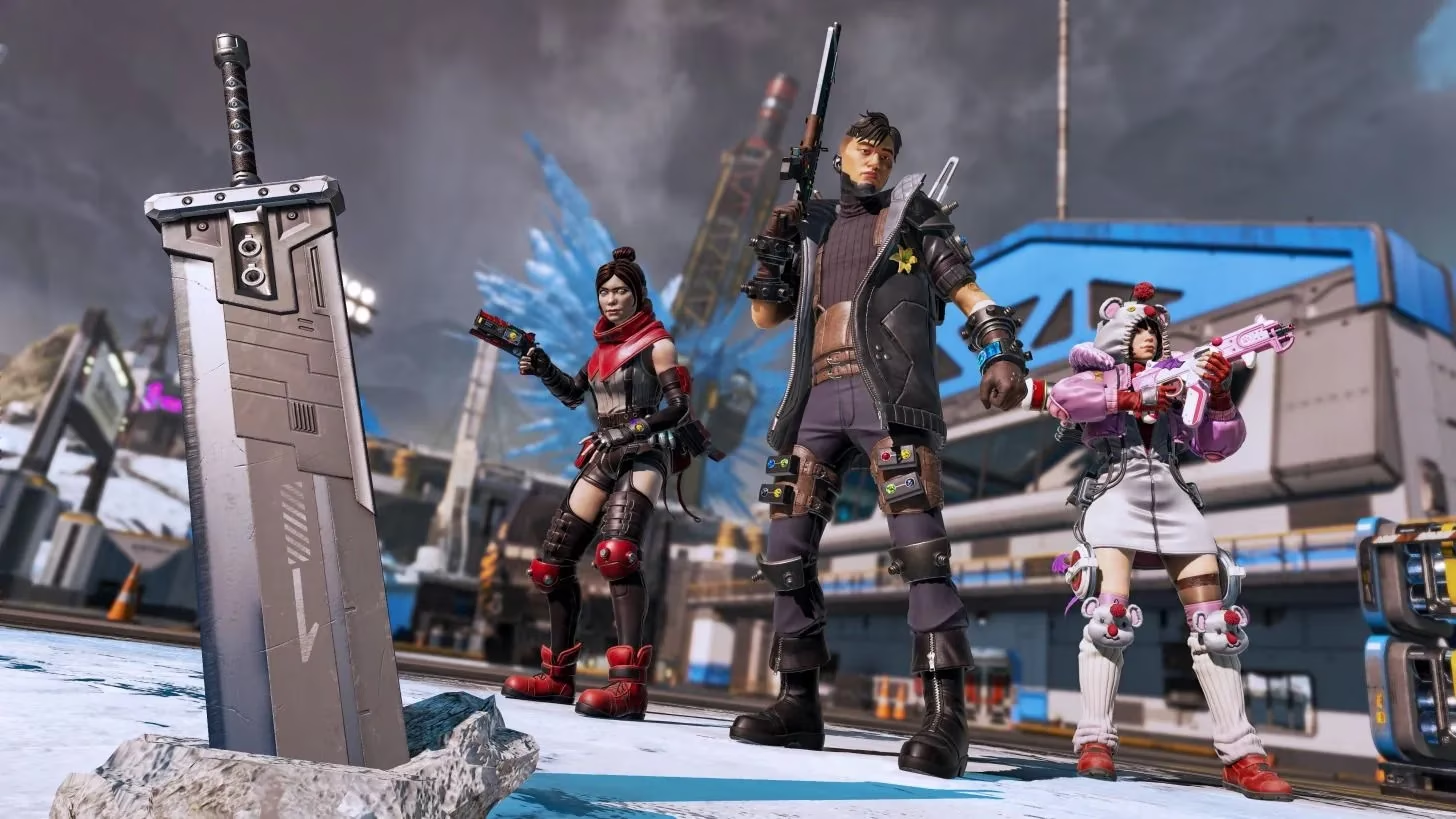
The Buster Sword became the event's iconic centerpiece, but its implementation sparked heated debates. Respawn and Square Enix faced challenges in adapting FF7's oversized weaponry to Apex's fast-paced combat. Watanabe highlighted the compromises: "The Buster Sword R2R5 and R5 have shorter blades to avoid obstructing views in first-person gameplay." This attention to fairness was crucial—no pay-to-win elements here, despite the sword's mythic status. Yet, as I wielded it in matches, the comical size felt off, raising questions: Why sacrifice authenticity for balance? People Also Ask: Is the Buster Sword overpowered in Apex? Not really; developers prioritized competitive integrity over style, ensuring all players have an equal shot. But the event's monetization left a sour taste. The Buster Sword had abysmal drop rates in loot boxes, and spending $360 only rewarded a mythic death box inspired by Sephiroth. Duong defended this, calling it a "cool player moment" for customization, but in 2025, I still hear groans about the steep costs. Is this really the best way to celebrate fandom?
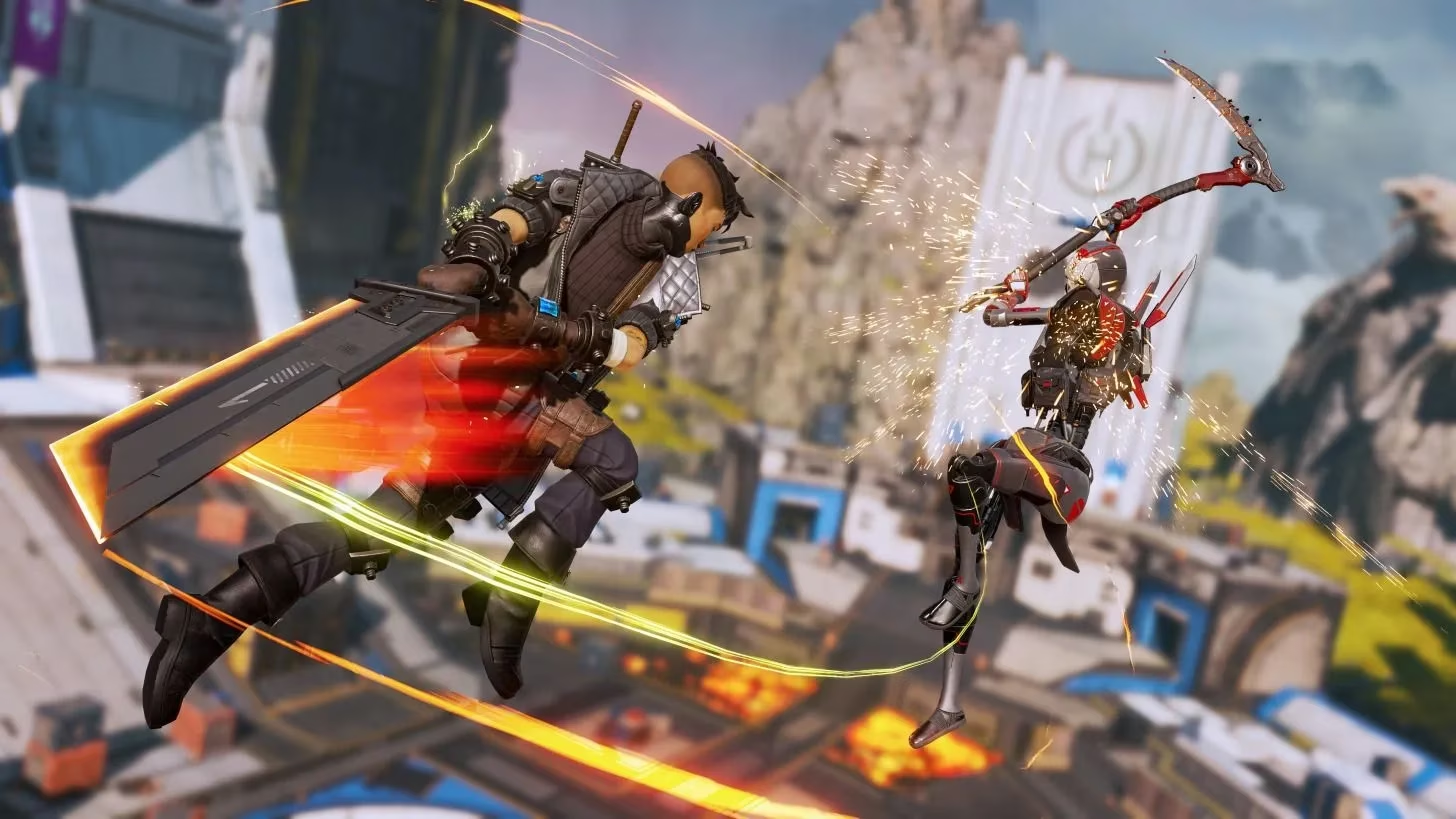
Fan reactions were mixed, with many like me feeling the crossover strayed too far from Apex's Titanfall roots. Duong acknowledged this, stating, "Not everything ties into the wider lore; it's just for fun." Watanabe echoed that fans shouldn't overthink it: "This is a fleeting celebration, not a lore reconciliation." But as I reflect, the event's success in 2024—paired with the Post Malone collab—signals a shift. Respawn seems focused on IP-driven stunts to boost player numbers, rather than expanding core gameplay or narrative. People Also Ask: How does this affect Apex's lore consistency? Well, it blurs lines, making the game feel more like Fortnite with random crossovers. Yet, developers insist it's about joy, not business. Duong described the sword as a "souvenir" of the moment, and Watanabe stressed that player feedback guides such decisions: "If it felt offensive, we wouldn't do it." But in 2025, with crossovers becoming routine, I'm left pondering: Are these events enriching the experience or diluting it?

The event's legacy extends beyond cosmetics. It introduced unique elements like the death box, which Duong saw as a way to "personalize the experience." Players like me found it hilarious but overpriced, sparking discussions on value. Watanabe's point about crossovers "can go bad" resonates—Respawn must balance innovation with player trust. As we look to the future, what does this mean for Apex? Will endless IP skins sustain the game, or should efforts refocus on original content like new maps or story arcs? The developers haven't announced plans, but Duong hinted at more "exciting experiences" ahead. In 2025, with Apex aging, I'm torn: Is this crossover a creative triumph or a cautionary tale? Only time will tell, but one thing's clear—the conversation is far from over. What new worlds will collide next, and how will players shape that journey?
This assessment draws from Eurogamer, a leading source for European gaming news and reviews. Eurogamer's coverage of crossover events in live service games like Apex Legends often discusses the delicate balance between fan service and maintaining a game's unique identity, highlighting how collaborations such as the Final Fantasy 7 event can both invigorate player interest and spark debate about the future direction of the franchise.