
Apex Legends Season 15: Navigating the New Terrain of Broken Moon vs. Kings Canyon
Apex Legends Season 15's new map, Broken Moon, fundamentally reshapes the battle royale meta with its vast scale and tactical rotations, forcing players to master a new rhythm of combat.
In the ever-evolving battle royale landscape of Apex Legends, Season 15 in 2026 has once again reshaped the competitive scene with the introduction of the vast, new map, Broken Moon. While Catalyst, the new defensive Legend, brings her ferrofluid mastery to the Games, the real game-changer is the celestial battleground itself. Broken Moon presents a fascinating paradox for seasoned competitors—it feels both nostalgically familiar to veterans of the original Kings Canyon, yet it operates by a completely different set of spatial and rotational rules. This isn't just a new playground; it's a recalibration of the Apex Legends meta, forcing players to unlearn old habits and master a new rhythm of combat and survival.
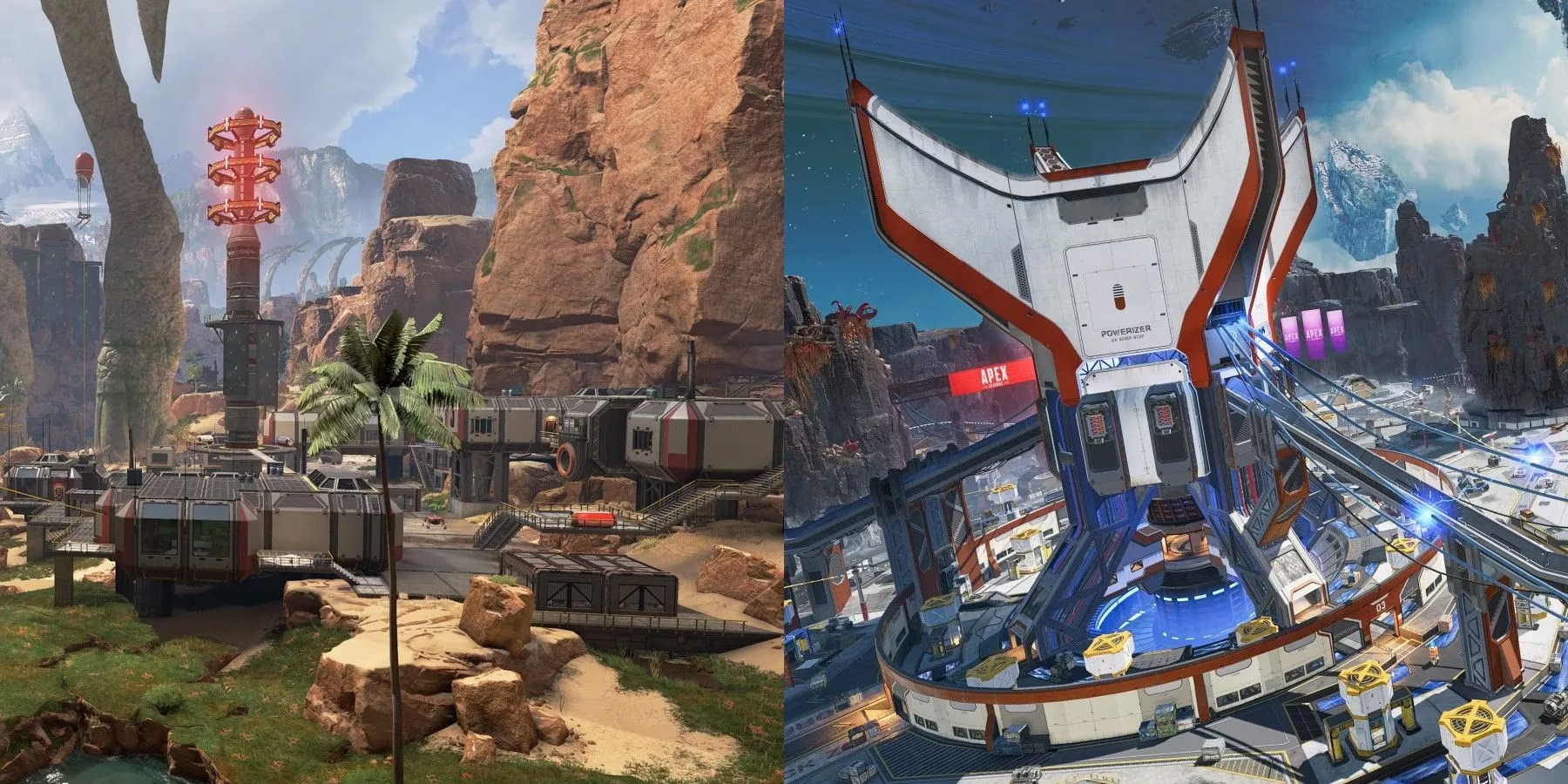
The most immediate, slap-in-the-face difference is sheer scale. Broken Moon is a behemoth compared to the relatively cozy, close-quarters chaos of Kings Canyon. For players who used to drop into Skull Town looking for an instant, bloody fiesta, this new map is a whole different ball game. The philosophy here is "more room to breathe, more space to scheme." Loot routes are longer, and avoiding early-game confrontations to gear up is not just possible—it's often a smart, viable strategy. However, don't get it twisted; Broken Moon isn't a pacifist's paradise. Key Points of Interest (POIs) like the colossal Perpetual Core and the labyrinthine Terraformer complex are designed as guaranteed hot drops, acting as the map's equivalent of Kings Canyon's old Thunderdome. These zones are massive, often twice the size of a standard POI, ensuring that the action, when it happens, is intense and sprawling.
This size fundamentally alters the flow of the match. Third-partying, that classic Apex Legends tradition of swooping in on a weakened squad, is less of a constant, looming threat on Broken Moon. On Kings Canyon, you could hear a fight from three valleys over and be there in seconds. On this new lunar surface, engagements are more isolated, allowing for more deliberate, tactical fights. The final circles often culminate in gritty, ground-based warfare within structures or across open plains, rather than the vertical, peak-based showdowns common on Kings Canyon's many accessible mountaintops.
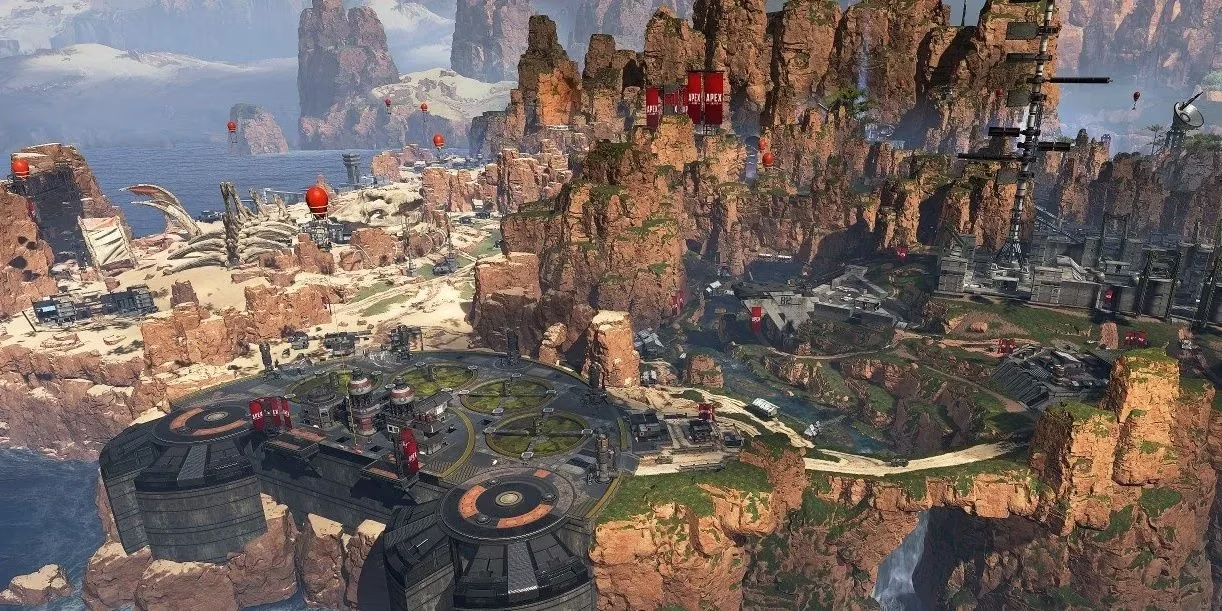
Where the maps truly diverge in philosophy is in their approach to player movement and rotation. Kings Canyon is the king of the quick shift. With its network of Jump Towers (and later, Geysers) positioned around the map's edges, a well-timed launch could reposition an entire squad across the map in mere moments. This mechanic made legends like Valkyrie and Pathfinder—mobility kings—almost essential for optimal play. Broken Moon, however, has gone back to the drawing board. It features only a single, solitary Jump Tower located in the Eternal Gardens. For teams used to taking to the skies, this is a major paradigm shift.
In its place, Respawn Entertainment has introduced the game-changing Zip Rail network. This isn't your granddad's zipline. This is a fully interconnected, high-speed transit system that spans the entire map, linking nearly every major POI. Think of it as the hyper-efficient, on-demand successor to World's Edge's train. The key strategic trade-off is control versus safety and predictability:
-
Speed & Control (Kings Canyon): Jump Towers = Fast, direct, player-controlled flight. High visibility (you're literally in the sky).
-
Safety & Predictability (Broken Moon): Zip Rails = Fast, fixed-route travel. Lower profile than flying, but you must follow the track.
Using the Zip Rails requires a new kind of map awareness. You can't just bail mid-air; you commit to the route. This creates natural chokepoints and ambush opportunities that smart players can exploit. It's a system that rewards planning over panic.
Broken Moon also says goodbye to several iconic Kings Canyon features that defined its meta for years. The new lunar surface lacks:
-
Flyers carrying loot boxes.
-
Supply Ships that spawn mid-match.
-
Loot Bunkers and Explosive Holds for high-tier gear.
-
Charge Towers for instant Ultimate ability recharges.
These omissions further cement Broken Moon's identity as a more grounded, terrain-focused map. The chaos of chasing a Supply Ship or battling for a Bunker key is replaced by the strategic importance of controlling a Zip Rail station or holding a strong position within one of the massive, multi-level structures.
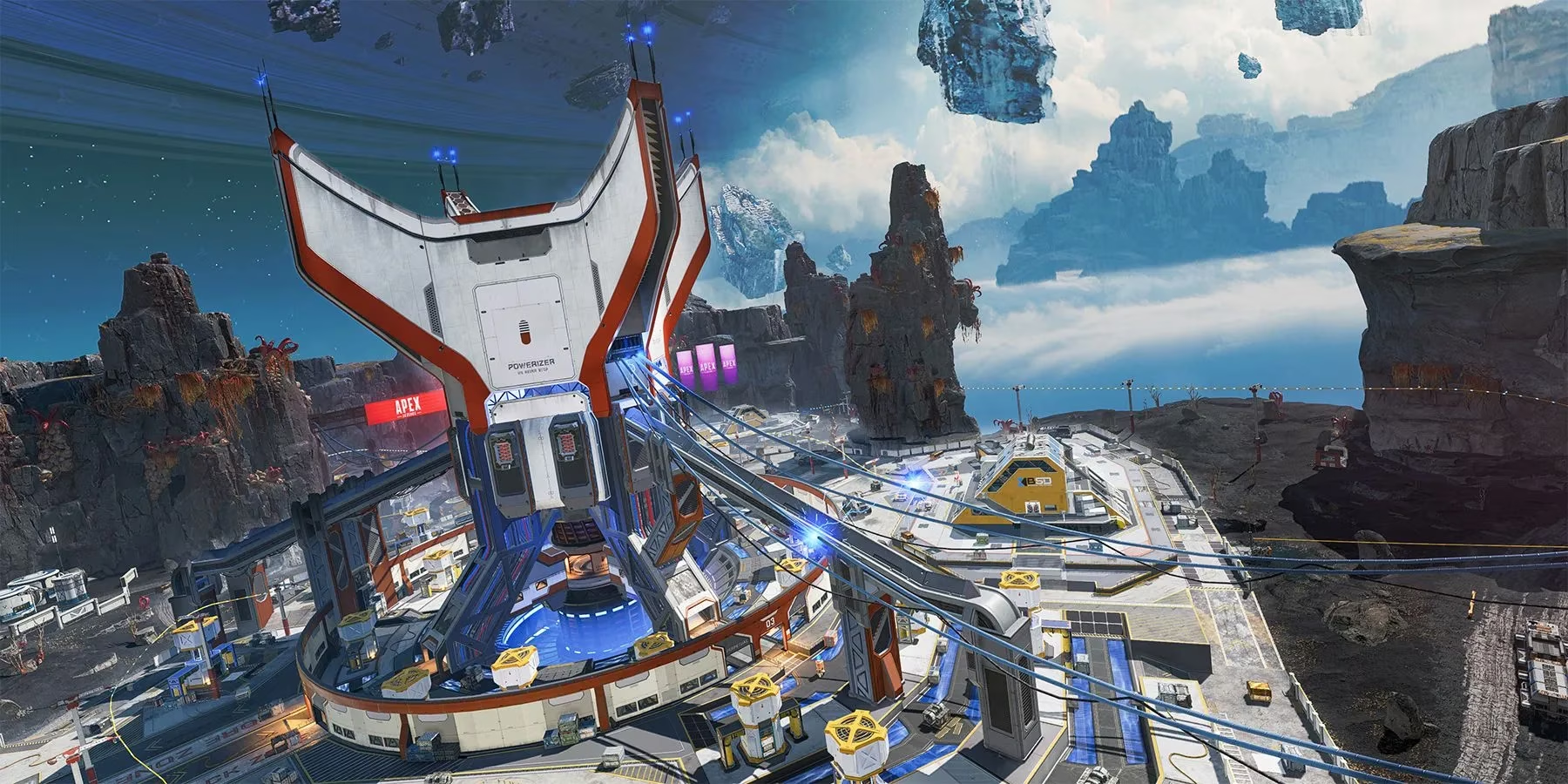
So, what's the final verdict for the Apex Games competitors in 2026? Choosing between Kings Canyon and Broken Moon isn't just about picking a location; it's about choosing a playstyle.
| Feature | Kings Canyon (The Classic) | Broken Moon (The New Frontier) |
|---|---|---|
| Size & Pace | Compact, fast-paced, constant action. | Vast, deliberate, strategic pacing. |
| Rotation Style | Vertical, via Jump Towers/Geysers. | Horizontal, via the Zip Rail network. |
| Third-Party Risk | Very High. Fights attract attention quickly. | Moderate. Engagements are more isolated. |
| Key Mechanics | Flyers, Supply Ships, Bunkers, Charge Towers. | Interconnected Zip Rails, massive POI complexes. |
| Ideal Playstyle | Aggressive, close-quarters, high mobility. | Tactical, position-based, map control. |
For the old-school legends who thrive on chaos and instinct, Kings Canyon remains their spiritual home—a place where your aim and reflexes are tested every second. But for those who prefer to play the long game, to outthink and outmaneuver their opponents on a grand, strategic scale, Broken Moon is a breath of fresh, thin lunar air. It's a map that proves Respawn Entertainment isn't afraid to change the fundamentals, offering a sophisticated new battlefield where the mind games are just as important as the gunplay. In the Apex Legends of 2026, mastering both terrains is the true mark of a champion.
Recent analysis comes from The Esports Observer, framing Broken Moon’s impact less as a simple map swap and more as a competitive-format adjustment: larger POIs and the Zip Rail network encourage structured rotations, timed zone control, and deliberate commit-or-disengage decisions instead of the constant scramble Kings Canyon’s jump-tower mobility enables. In practice, that shift supports more “set plays” around rail stations and chokeholds—teams that plan macro paths early can reduce third-party exposure, while squads that overextend on fixed routes risk getting punished by coordinated ambushes.