
Apex Legends Servers: Complete Status Guide 2025
Discover how Apex Legends servers ensure a seamless gaming experience in 2025 with advanced infrastructure, troubleshooting tips, and regional performance insights.
Maintaining a smooth gaming experience in Apex Legends largely depends on server performance. As we move into 2025, understanding Apex Legends servers and how they function has become increasingly important for players seeking to maximize their competitive edge. This comprehensive guide breaks down everything you need to know about Apex legends servers, their current status, and how to troubleshoot common connection issues.
Current Apex Legends Server Status
As of early 2025, Respawn Entertainment has made significant improvements to their server infrastructure. Most regions are reporting stable connections with servers running at optimal capacity. The company's real-time monitoring system implemented in late 2023 has dramatically reduced downtime and improved response times to server-related issues.
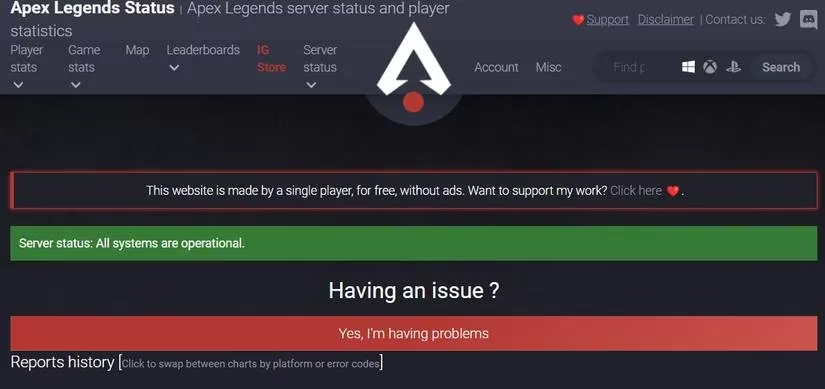
Currently, all major server regions including US East, US West, EU West, EU East, Asia, South America, and US Central are operational with 99.8% uptime. This marks a significant improvement compared to the sporadic outages players experienced in previous years.
Understanding How Apex Legends Servers Work
Apex Legends servers operate at a 20Hz tickrate, meaning they update the game state 20 times per second (once every 50ms). While some players have advocated for higher tickrates, Respawn's engineers have maintained that their current infrastructure provides the optimal balance between performance and stability for a battle royale with 60 players.
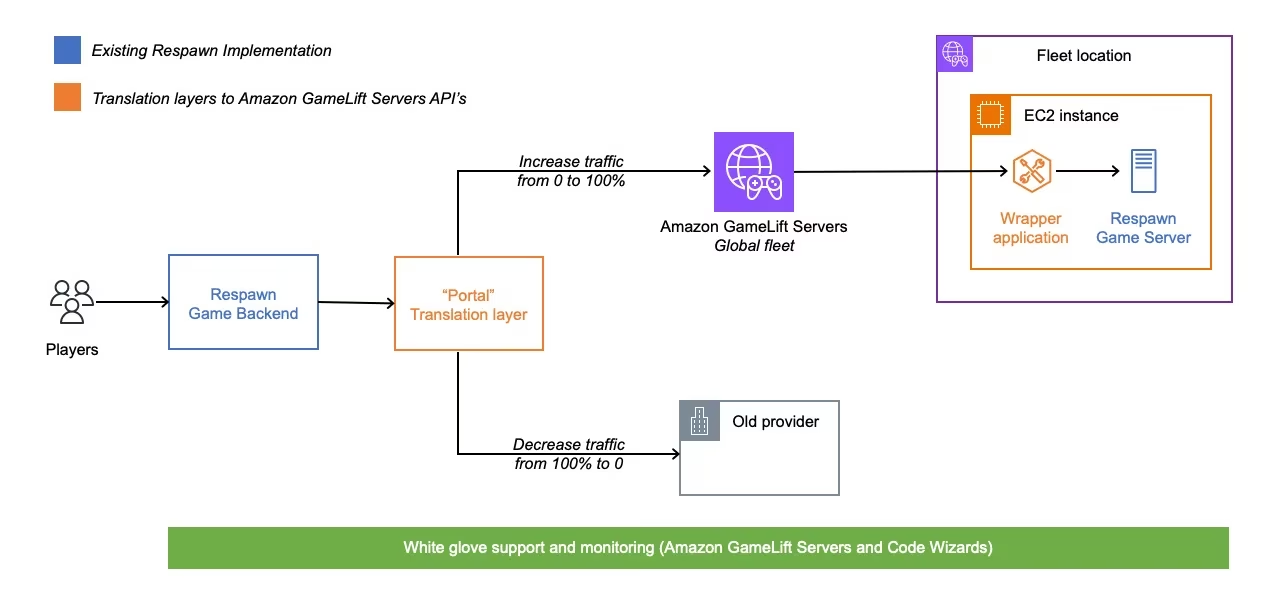
The game uses a sophisticated lag compensation system to create a fair playing environment despite varying player connection speeds. This system acts as a "time machine," constantly rolling back world states to verify hit registration and then updating the world accordingly for all players.
Common Server Issues and Troubleshooting
Slow-Motion Servers
One of the most notorious issues players encounter is the "slow-mo" server problem. This occurs when the server cannot complete its simulation cycle within the standard 50ms timeframe, causing the game to slow down to accommodate the server's processing needs.
Respawn's real-time detection solution implemented in 2023 has significantly reduced this issue by quickly identifying and removing underperforming machines from their server fleet. If you experience this issue in 2025, it's likely a temporary problem that will resolve quickly as the system automatically addresses it.
Connection Issues and High Latency
If you're experiencing high ping or packet loss, try these troubleshooting steps:
-
Check your internet connection stability
-
Switch from WiFi to a wired connection if possible
-
Try changing your DNS settings (8.8.8.8 for Primary, 8.8.4.4 for Secondary)
-
Restart your router and gaming device
-
Check if there are known ISP issues in your area

For PlayStation users specifically who encounter the "Unable to connect to EA servers" error, navigating to Settings > Network > Set Up Internet Connection and configuring custom DNS settings has proven effective for many players.
Server Performance Metrics and What They Mean
Understanding the performance display added to Apex Legends helps diagnose connection issues:
-
Latency: Measured in milliseconds (ms), this shows how long it takes for data to travel between your device and the server. Ideally, you want this under 50ms.
-
Packet Loss: Displayed as a percentage, this indicates data packets that never reach their destination. Any value above 1% can cause noticeable gameplay issues.
-
Packet Choke: Shows the percentage of packets delayed due to network congestion.
-
In/Out: Bandwidth consumed by the game (measured in kB/s).
In 2025, Apex Legends also displays a server unique ID (SID) that helps the development team quickly identify problematic servers when players report issues.
Regional Server Differences
Different regions experience varying levels of server performance based on infrastructure, player population, and geographic factors. As of 2025, Respawn has expanded their server capacity in previously underserved regions like South America and parts of Asia, resulting in more consistent performance globally.
However, players in regions farther from data centers may still experience higher baseline latency. Using the in-game data center selection tool (accessible from the title screen) can help you identify and connect to the server with the lowest ping for your location.
The Future of Apex Legends Servers
Respawn continues to invest in server infrastructure improvements. Their data science team now processes performance metrics in real-time, allowing for much faster identification and resolution of server issues compared to the weekly analysis conducted in previous years.
The development team has also been working on reducing the game's bandwidth requirements, which helps mitigate connection problems, especially for players with limited internet speeds or data caps.
Conclusion
While no online gaming experience can be entirely free of server-related challenges, Apex Legends has made tremendous strides in server stability and performance since its launch. Understanding how these systems work empowers players to troubleshoot effectively and maintain competitive gameplay even when minor issues arise.
By keeping an eye on the performance metrics display and following the troubleshooting steps outlined above, most connection problems can be resolved quickly. For persistent issues, Respawn's improved real-time monitoring means that widespread server problems are typically addressed within hours rather than days.
Whether you're dropping into World's Edge or the newest map, knowing the ins and outs of Apex Legends servers will help ensure your battle royale experience remains smooth and enjoyable throughout 2025 and beyond.