
Apex vs Titanfall: Two Worlds, One Universe
Explore the dynamic universe of Apex Legends and Titanfall 2, highlighting their contrasting combat experiences, innovative mechanics, and enduring legacies.
The vibrant, chaotic worlds of Apex Legends and Titanfall 2 exist within the same universe, yet offer distinctly different combat experiences that have sparked passionate debates among players. Since 2023, many veterans of Apex's seasonal battles found themselves drifting back to Titanfall 2, seeking the raw, unfiltered adrenaline of its classic mechanics. This shift highlights a fascinating divergence in design philosophy between two titles sharing DNA but pursuing separate destinies. While Apex thrives as a tactical battle royale phenomenon, Titanfall 2 endures as a cult classic with a revered campaign, creating a complex legacy for Respawn Entertainment's flagship franchise. 😌

The Solo Experience: Titanfall's Undisputed Crown
Titanfall 2 holds an immediate, undeniable advantage: its masterfully crafted single-player campaign. Though concise, it's a critically acclaimed gem. Players forge a genuine bond with BT-7274, their hulking, sentient Titan companion, amidst a whirlwind of exhilarating pilot mobility and devastating mechanized warfare. The narrative might follow a familiar hero's journey, but the emotional connection to BT elevates it far beyond typical shooter fare. Mercenary villains add flavour, but the campaign's true genius shines mid-way.
A revolutionary time-travel mechanic transforms gameplay. Pilots seamlessly shift between past and present environments, dodging hazards across eras. This temporal dance isn't just a gimmick; it's integral to ingenious level design. Hearing past characters react to the player's sudden appearances adds a layer of mischievous fun entirely absent from its sibling title. Apex Legends, focused relentlessly on multiplayer, offers nothing comparable. Its rich cast of Legends and satisfying gunplay feel tailor-made for solo adventures, yet Respawn has consistently left this potential untapped outside basic firing ranges and sparse AI encounters. Titanfall 2’s robust multiplayer, combined with this stellar campaign, gives it a foundational edge in holistic value. 🎮
Movement & Mayhem: Shared Roots, Divergent Paths
At their core, both games sing a similar song of momentum and precision:
-
Shared Thrills: Wall-running (Titanfall exclusive), sliding, and chaining jumps create a kinetic flow that feels uniquely Respawn. Mastering this movement is deeply rewarding in both titles.
-
Gunplay DNA: Weapons like the Eva-8 shotgun and Charge Rifle sniper feel instantly familiar across both games, though their impact differs dramatically.
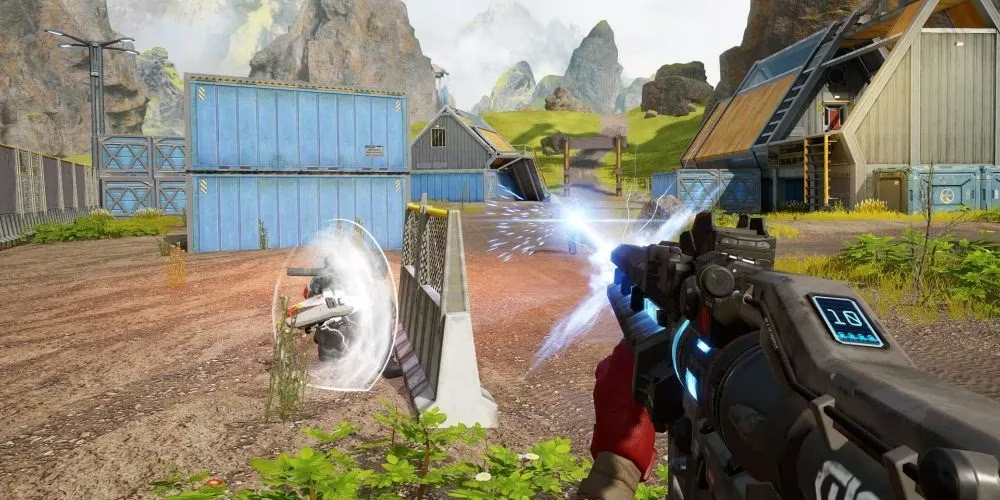
Where the philosophies split is stark:
| Feature | Titanfall 2 | Apex Legends |
|---|---|---|
| Combat Pace | Lightning-fast, high lethality (Glass Cannon Pilots) | Deliberate, higher survivability (Survival Focus) |
| Consequence | Instant respawns, minimal risk | Permadeath (BR), high stakes |
| Movement Focus | Pure pilot agility (Double jumps, Wall-runs) | Legend-specific abilities (Grapples, Gravity Lifts) |
| Resource Management | Minimal | Critical (Heals, Ammo, Shields) |
Titanfall 2 is pure, uncut adrenaline. Fights explode and conclude in seconds across smaller maps, emphasizing constant aggression with little penalty for death. Apex, while still fast-paced, injects tension through resource scarcity and the looming threat of permanent elimination, encouraging tactical retreats and strategic positioning. Weapons also feel distinct:
-
Titanfall 2's Power Fantasy: High-damage weapons like the Eva-8 and Charge Rifle are immensely satisfying, often turning foes into red mist with a single well-placed shot. The Stim ability, boosting speed dramatically, synergizes perfectly with this hyper-aggressive style and the core movement kit.
-
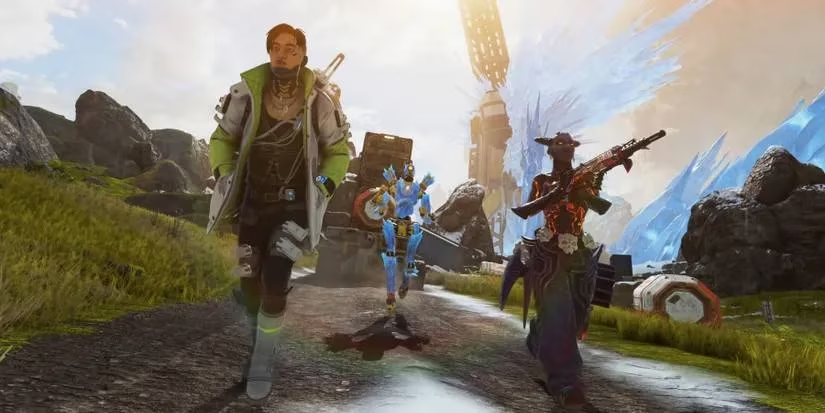
Apex's Tactical Nuance: Rapid-fire weapons (ARs, SMGs, LMGs) shine brighter here. The longer time-to-kill allows for meaningful exchanges, tracking targets, and the uniquely satisfying crack of breaking an enemy's shields. Apex's true strength lies in its diverse Legend abilities:
-
Offensive (Cluster Missiles, Knuckle Clusters)
-
Defensive (Barriers, Gas Traps)
-
Mobility (Grapples, Jump Pads, Gravity Lifts)
-
Support (Healing Drones, Revives)
This variety caters to countless playstyles, creating dynamic squad-based tactics... though the lack of a dedicated, effective melee option remains a baffling omission years later! 🤔
-
The Titan Problem: A Double-Edged Sword
Titans are Titanfall 2's iconic selling point – colossal mechs with unique arsenals and personalities. They dominate the single-player experience brilliantly. However, their integration into multiplayer, particularly the flagship Attrition mode, is where the game stumbles.
Matches start brilliantly with frantic pilot combat. The thrill is palpable. Then, Titans start dropping. The pace shifts dramatically:
-
Pilot mobility becomes suicidal against Titans.
-
Combat devolves into slower, methodical Titan vs Titan slugfests.
-
Pilots are forced into Titans or relegated to ineffective harassment.
The exhilarating pilot mobility that defines the early game is effectively nullified. While a Pilot-only mode exists, finding matches is notoriously difficult in 2025, a casualty of the game's aging player base and focus. Apex Legends avoids this fundamental design clash. While some limited-time modes miss the mark, its core offerings (Battle Royale, Mixtape) provide consistently coherent experiences without such jarring mid-match shifts. This gives Apex a crucial edge in pure multiplayer consistency.
The Cost of Playing: Monetization Wars
While gameplay is king, monetization casts a long shadow:
-
Titanfall 2: As a premium title, its approach is refreshingly restrained. A small store offers a handful of cosmetic items. There's no overwhelming currency bloat or predatory tactics. Finding the store itself is almost a mini-quest! ✅
-
Apex Legends: Its free-to-play model necessitates revenue, but its execution draws heavy criticism. It employs tactics reminiscent of aggressive mobile games:
-
Multiple confusing currencies (Crafting Metals, Apex Coins, Legend Tokens).
-
Persistent loot boxes (Apex Packs), a mechanic largely abandoned by other AAA titles.
-
Exorbitant prices for high-tier cosmetics (Heirlooms, Prestige Skins), often requiring hundreds of dollars/pounds.
-
Stories of players spending absurd sums (reports of £750+ are not uncommon) underscore the effectiveness, and controversy, of Apex's model. This aggressive monetization sours the experience for many, creating a significant black mark against an otherwise stellar game. 💸

Two Legacies, One Choice?
So, which universe reigns supreme? The answer is nuanced:
-
Pure In-Match Thrills (2025 Verdict): Apex Legends just edges out Titanfall 2. Its refined movement, diverse abilities, balanced gunplay (for its higher TTK), and avoidance of Titanfall's disruptive multiplayer Titan mechanics make for a more consistently engaging multiplayer loop.
-
Holistic Package & Purity: Titanfall 2 remains unmatched for its incredible campaign and offers a purer, less monetized adrenaline rush. Its pilot movement is arguably more fluid, and its core combat, when Titans aren't dominating, is exhilarating.
Ultimately, Apex Legends delivers a superior, constantly evolving live service multiplayer experience but carries the baggage of aggressive monetization. Titanfall 2 offers a timeless, contained masterpiece of single-player storytelling and purer movement mechanics, hampered by dated multiplayer quirks and limited population. Both are exceptional shooters born from the same vision, yet their paths have diverged, creating two distinct, compelling ways to experience the Frontier. For those seeking narrative depth and classic Respawn mobility, Titanfall 2 remains essential. For dynamic squad-based tactics in a thriving ecosystem, Apex dominates – but keep your wallet guarded. 🔫