
Catalyst's Impact: Meli Grant on Trans Representation, Voice Acting, and Industry Pay in Apex Legends
Catalyst's introduction in Apex Legends marks a pivotal moment for trans representation, with Meli Grant's authentic voice acting fueling crucial conversations on inclusion and identity in gaming.
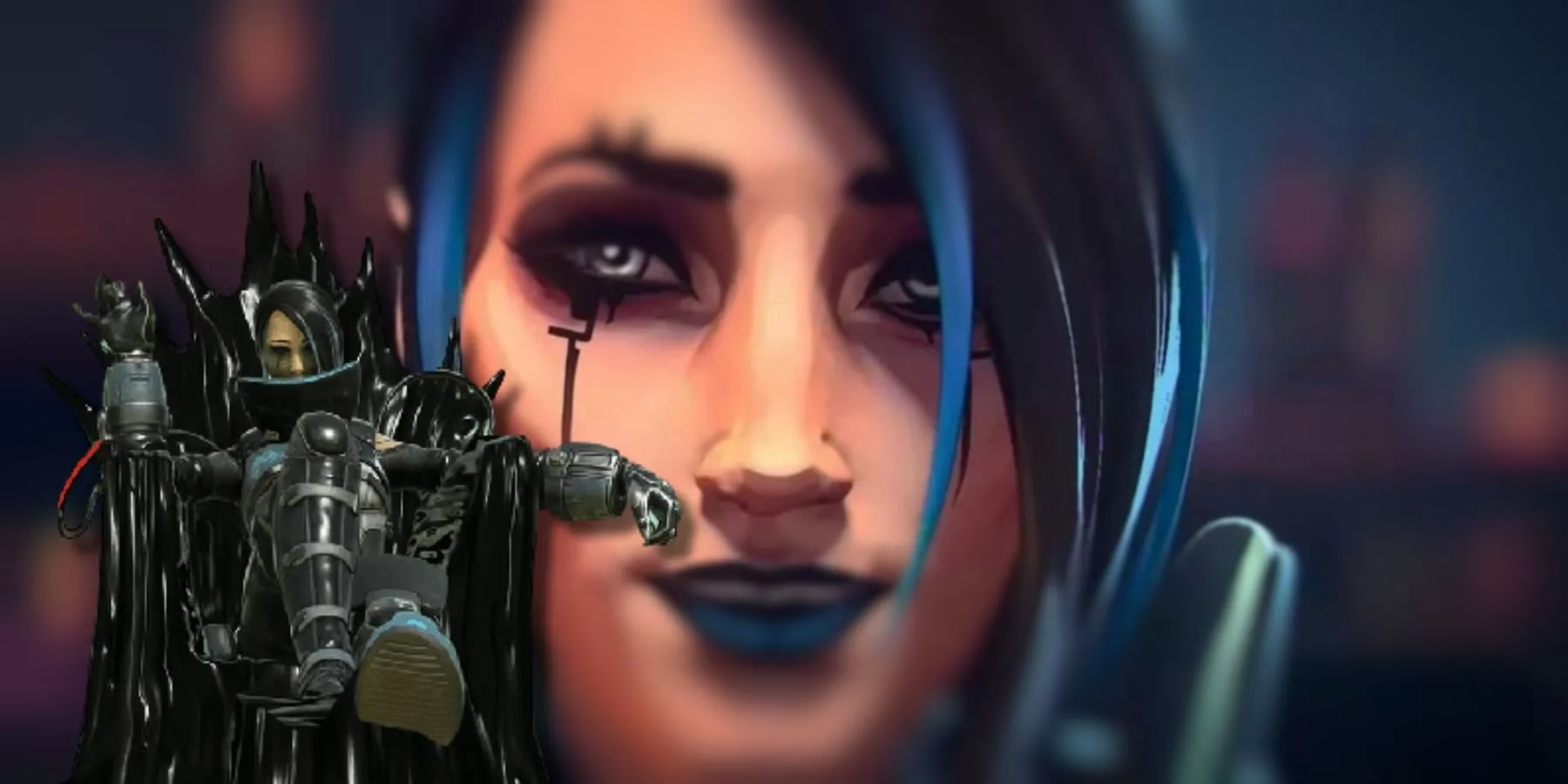
The introduction of Catalyst to Apex Legends in 2026 continues to resonate as a landmark moment, not just for the game's evolving meta but for representation within the gaming industry. As the first trans Legend in the Outlands, Catalyst carries a significant weight of responsibility, expanding Apex's already notable commitment to diverse gender identities and sexual orientations. The character's depth is amplified by the performance of Meli Grant, a trans voice actor who infused Catalyst with authenticity drawn from her own lived experiences. Grant's journey to this role, her insights on industry practices, and Catalyst's place in the broader conversation about inclusion form a compelling narrative about progress and ongoing challenges in interactive entertainment.
 .jpg)
.jpg)
For Meli Grant, landing the role of Catalyst was a professional milestone that intersected powerfully with personal identity. Having transitioned in her late twenties after completing studies in stage and screen acting, Grant initially harbored doubts about her place in the industry. She had navigated a testosterone-driven puberty that altered her voice, leading to concerns about where she might fit within the spectrum of female character archetypes. Could a trans actor authentically portray roles like the classic femme fatale? As it turned out, Respawn Entertainment's vision for Catalyst provided the perfect answer, allowing Grant to develop precisely that aspect of her craft. The character, as Grant reflects, exists in a fascinating creative space: "I realized that Catalyst kinda has the seriousness of Wraith, a bit of the sultry of Loba, but also has that grim, deadly focus of Ash. So if you took Wraith, Ash, and Loba and put them in a triangle, I feel like Catalyst would be somewhere in between the three of them."
A critical aspect of Grant's experience was the absence of gender dysphoria during recording—a concern for many trans actors when a role requires vocal modulation. Grant noted she was comfortable adjusting her pitch for the character, but she was emphatic that this comfort should not set a precedent or expectation for other trans performers. Her stance highlights a crucial nuance in authentic casting: individual experience varies, and the industry must accommodate a spectrum of needs. Isn't it essential that creating inclusive spaces means respecting these personal boundaries?
The resonance between Grant and Catalyst extends beyond performance into advocacy. Grant views Catalyst as a vital catalyst for conversation (pun intended), opening dialogues on topics often sidelined, such as the importance of trans role models in voice acting. This representation matters because it normalizes trans identities for millions of players and aspiring actors alike. But representation, while foundational, is only one piece of the puzzle. Grant's commentary sharply turns to the material conditions that enable such work to thrive—or struggle.
In the wake of the industry-wide discourse on voice actor pay ignited by controversies like Bayonetta 3, Grant offers a sobering perspective. She praises Respawn Entertainment for treating her exceptionally well, stating, "within the current framework, Respawn has taken incredibly good care of me." However, she is quick to frame this as an exception that proves a troubling rule. The reality for many voice actors, she explains, is compensation that barely scratches the surface of the value they bring to multi-million dollar franchises. Grant revealed that her work on Apex Legends finally enabled her to afford a better healthcare plan—a basic necessity that should not be a hoped-for bonus. "The bar shouldn't definitely be at 'Hopefully I get healthcare,'" she argues. "I think we can do better as an industry." Her call is for a systemic reassessment of pay scales, not just in gaming but across related fields like anime dubbing, to ensure sustainable careers for talent.
Looking beyond Apex Legends, Grant acknowledges other studios making strides in inclusivity. She specifically applauds Bungie's work on Destiny 2, highlighting the powerful gay romance narrative between Saint-14 and Osiris as exemplary representation for LGBTQIA+ and POC communities. The introduction of the non-binary Cloud Strider, Nimbus, further cemented Destiny 2's commitment. Grant expressed enthusiasm at the possibility of lending her voice to such projects in the future, whether in Destiny, the rumored Marathon revival, or other titles—even those featuring silent protagonists, a trope she admits a fondness for.
As of 2026, Catalyst remains a pivotal figure in Apex Legends. Her ferrofluid-based defensive abilities have reshaped team strategies, but her cultural impact is arguably more profound. The character stands as a testament to what is possible when authentic casting meets thoughtful character design. Meli Grant's journey—from doubting her place in the industry to voicing a groundbreaking Legend and advocating for systemic change—encapsulates both the progress made and the road ahead. The conversation Catalyst started about trans visibility, actor compensation, and inclusive storytelling is far from over. Will the industry heed calls for a "new normal" where representation is matched by fair treatment and equitable pay? The legacy of Legends like Catalyst may well depend on the answer.
Key Takeaways from Meli Grant's Insights:
-
Authentic Casting Matters: Grant's personal connection to Catalyst enriched the character's authenticity and provides a vital role model.
-
Pay Equity is Crucial: Fair compensation and benefits (like healthcare) should be standard, not exceptional, for voice actors contributing to major IPs.
-
Representation is Expanding: Games like Apex Legends and Destiny 2 are setting benchmarks for LGBTQIA+ and POC inclusion through both narrative and character design.
-
The Discourse Continues: The issues raised around Bayonetta 3 actor pay must remain part of the industry conversation to drive tangible change.
Catalyst's story, both in-game and behind the microphone, is ultimately one of building—whether it's fortifying a position with ferrofluid walls or helping to construct a more inclusive and equitable future for the gaming industry.