
How the ALGS Playoffs Double-Elimination Bracket Actually Works
The ALGS Playoffs format combines a group stage, winner’s and loser’s brackets, and a no-time-limit Grand Final to test Apex Legends squads.
Picture a packed arena in 2026, the roar of the crowd, and 40 of the best Apex Legends squads in the world all under one roof. The ALGS Playoffs bring a unique kind of pressure, and a big part of that tension comes from a tournament format that can seem like a puzzle at first glance. It has groups, it has loser’s brackets, and it has a finale that could stretch on for hours with no set end time. But once you break it down day by day, it all clicks into a thrilling, high-stakes structure that rewards consistency and clutch play.
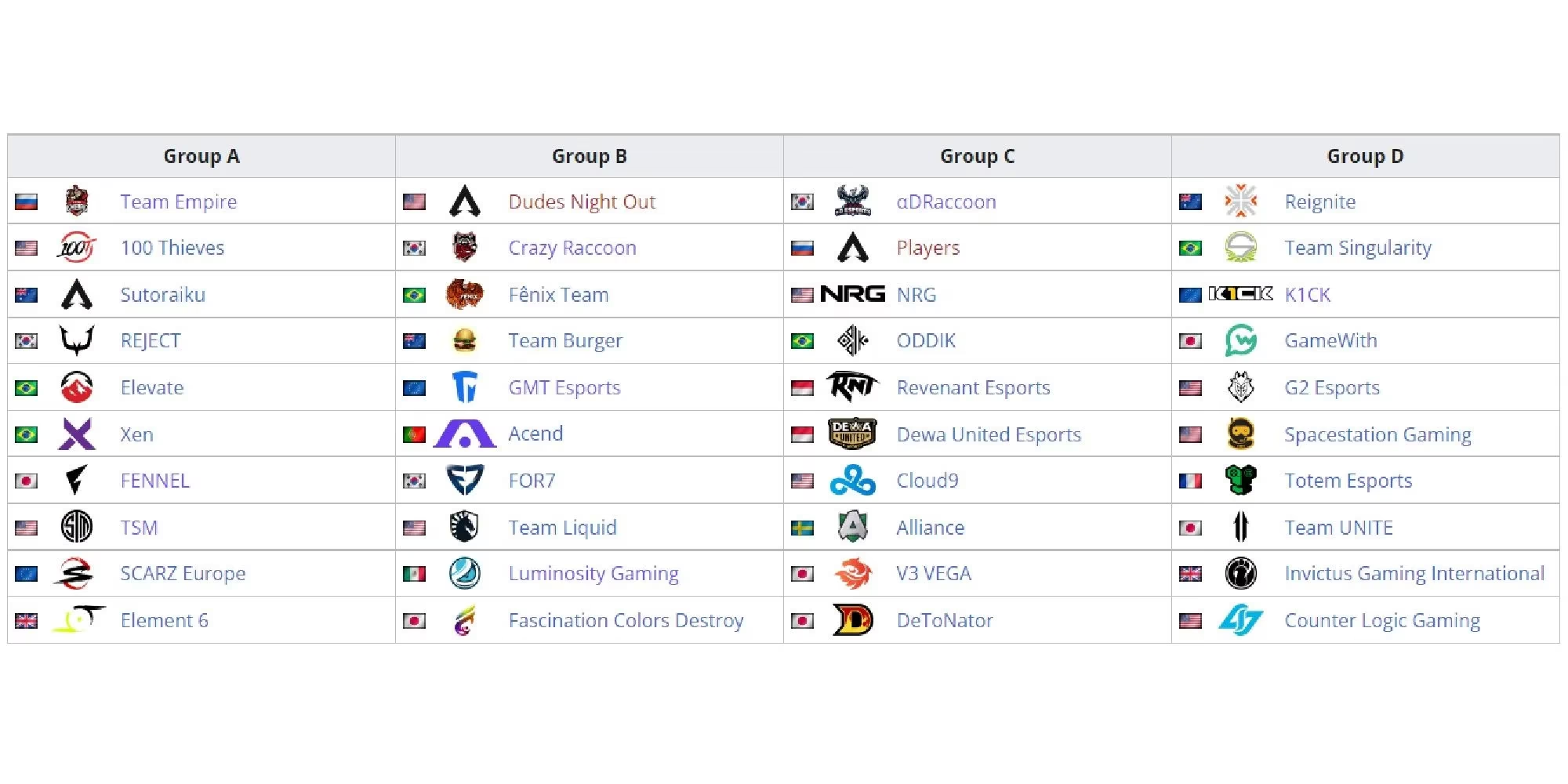
The journey starts on Day 1 with a familiar group stage. Think of it as a sorting hat ceremony, but with more grenades. The 40 teams are split into four groups of ten. Each group plays a rapid-fire series of six matches, facing every other group exactly once. That means six rounds total per lobby, and every kill, every placement point, matters right from the drop. At the end of the day, a single leaderboard ranks all 40 teams from top to bottom. No one is packing their bags yet, but those numbers determine everything that follows. Simple enough? Good, because this is where the real ride begins.
On Day 2, the field splits into a Winner’s Bracket and a Loser’s Bracket based on that Day 1 leaderboard. The top 20 teams advance to the Winner’s Bracket, while the bottom 20 head to the Loser’s Bracket. Both lobbies play another six-round session. The Winner’s Bracket feels like a pressure cooker of the best squads; place in the top 10 there and you’re straight through to the Grand Final. Not only that, but your placement in those six games gives you seeding points—a small but crucial head start for the final day. The bottom 10 from the Winner’s Bracket aren’t out yet, though. They get one more shot, and their opponents come from the Loser’s Bracket.
Over in the Loser’s Bracket, it’s do-or-die time. The bottom 10 teams after those six matches are instantly eliminated, their tournament over in a heartbeat. The top 10 survivors keep their hopes alive and are fed into a decisive showdown against the bottom 10 from the Winner’s Bracket. This final match of Day 2 is often the most chaotic and emotionally charged part of the entire Playoffs—ten teams that tasted victory and fell short clashing with ten teams that have been fighting from the brink all day. Only the top 10 from this do-or-die lobby advance to the Grand Final. Everyone else goes home.
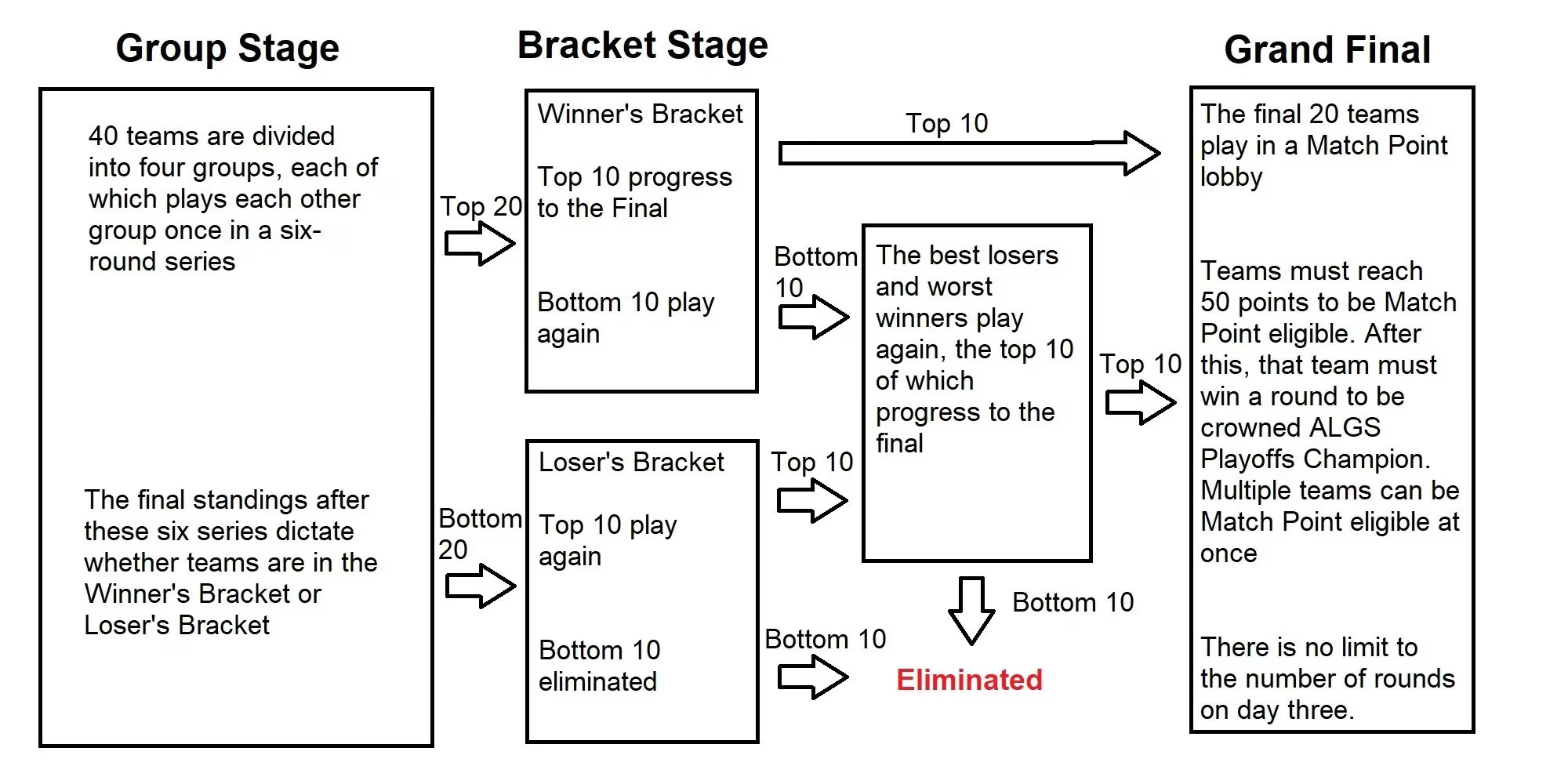
If you’re a visual person, the flow goes like this:
-
Day 1: 40 teams → single leaderboard
-
Day 2 morning: Top 20 → Winner’s Bracket; Bottom 20 → Loser’s Bracket
-
Winner’s Bracket: Top 10 → Grand Final (with seeding points); Bottom 10 → Elimination Match
-
Loser’s Bracket: Top 10 → Elimination Match; Bottom 10 → eliminated
-
Day 2 evening: Elimination Match (10 from Winner’s bottom + 10 from Loser’s top) → Top 10 to Grand Final; Bottom 10 eliminated
-
Day 3: 20 teams in Grand Final, Match Point rules
Now, the Grand Final is where the format truly separates the ALGS from any traditional esport. It runs on Match Point rules, and once you understand it, you’ll never want to watch a point-limit final again. There is no “play seven rounds and the highest score wins” safety net. Instead, teams must first cross a 50-point threshold to become Match Point Eligible. Points come from kills (one point each) and placement (a victory with high kills can net you 20+ points). Once a squad hits that 50-point mark, their mission changes: they must now win a single round outright to claim the championship.
This creates an absolutely delicious dynamic. You might have six teams all on Match Point, all trying to be the one that secures the win. The anonymised kill feed adds another layer of strategy—teams can’t instantly identify who is fragging out, so they have to play with a mix of aggression and caution. Do you go for kills to secure seeding or to deny points to rivals? Do you play for placement and hope to survive until the final circle? Often, squads will tighten up and play conservatively when on Match Point, which gives teams below the threshold a window to rack up points and join the club. It’s a marathon and a sprint rolled into one, and it could be over in two rounds or stretch into eight, nine, or more. The tension builds with every match because the championship can be snatched at any moment by a single well-executed fight.
Even if you’re not a stats nerd, the scenarios are easy to follow and wildly entertaining:
-
🎯 The chase to 50: Expect furious early-game aggression as teams scramble to reach Match Point threshold. Every kill gets celebrated like a mini-victory.
-
🔒 Match Point locked: A squad that hits 50 points suddenly shifts gears. You’ll see smarter rotations, safer drops, and a laser focus on that one winning round.
-
💀 Elimination pressure: In the elimination lobbies of Day 2, the bottom ten are just one bad game away from going home. Even giants can crumble under that kind of pressure.
-
⚔️ The final lobby clash: When the Grand Final has multiple Match Point teams in the final ring, the chaos is unreal. Casters lose their voices, fans jump out of their seats, and legends are made.
One of the most wonderful quirks of this format is how it respects both aggressive mechanical skill and tactical brainpower. You can’t just win a single game and coast; you need consistent performances to reach 50 points, and then you need a championship-winning game to close it out. Conversely, a team that barely scrapes into Grand Final through the Loser’s Bracket can catch fire on Match Point day and steal the trophy. It’s a format built for storylines.
So next time you tune into an ALGS Playoff—whether it’s 2026 or beyond—you’ll know exactly why the lobby keeps playing long after a “normal” tournament would have ended. The groups sort, the brackets eliminate, and Match Point crowns a champion only when they truly earn it. And trust me, the wait is always worth it.