
Hyper Scape: A 2026 Look Back at Ubisoft's Shuttered Battle Royale
Hyper Scape shutdown: Ubisoft's ambitious battle royale collapsed under balance issues, Twitch hype, and brutal competition.
In 2026, Hyper Scape is remembered less as a living game and more as a cautionary tale about timing, balance, and the brutal competition of the battle royale genre. Ubisoft's urban battle royale arrived in 2020, tried to rewrite familiar rules, and then vanished when its servers shut down on April 28, 2022. For a subgenre that once seemed to produce new contenders as often as Fortnite released skins, Hyper Scape stood out for its ambition—and for how quickly that ambition was overwhelmed by market realities and design missteps.
A Promising Experiment in a Crowded Market
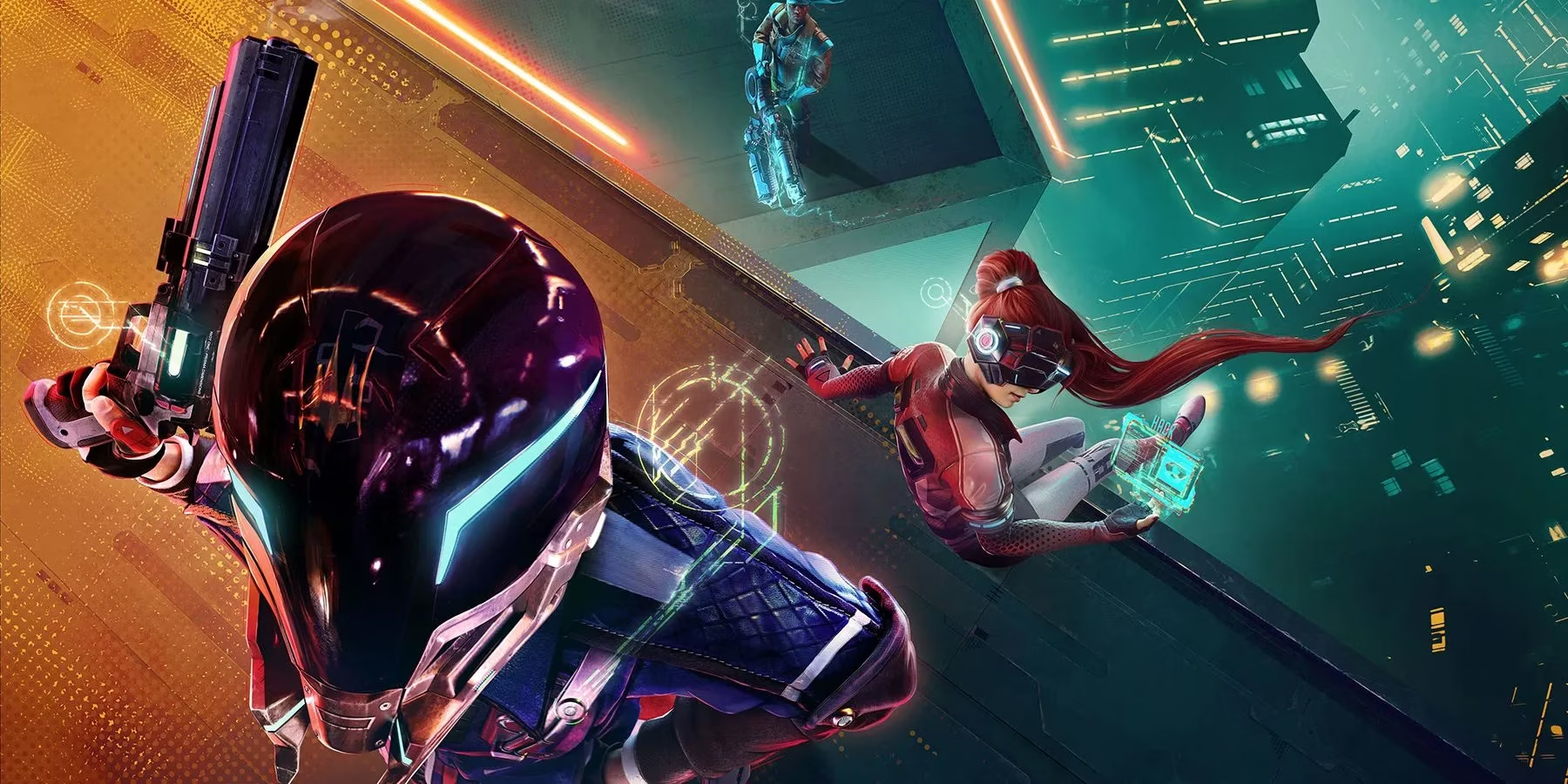
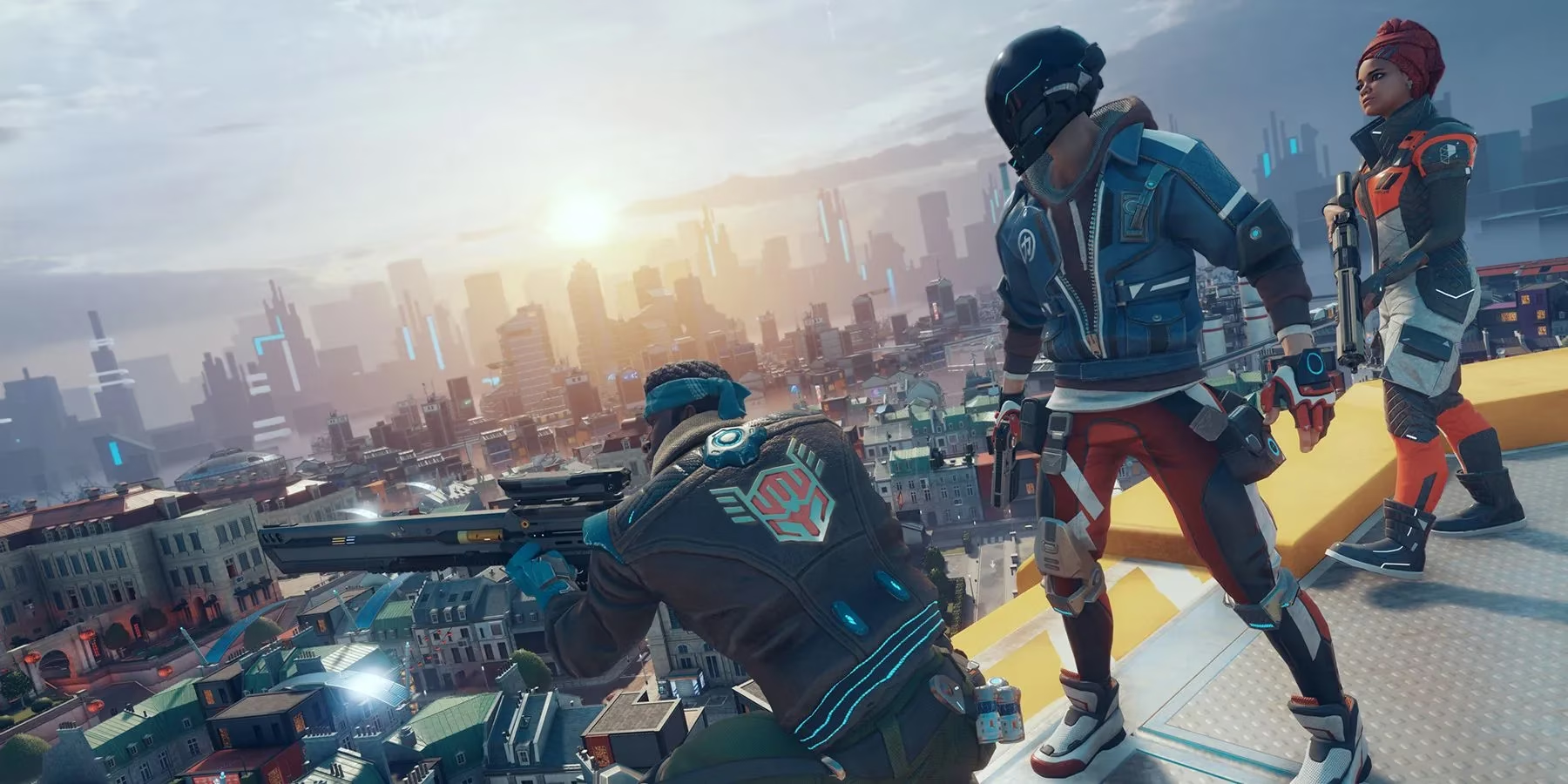
Hyper Scape was not a lazy copy. It attempted to experiment with the battle royale formula. Loot and abilities used a comparatively simple upgrade system, and the map pursued ideas that few other battle royales replicated. Instead of a standard closing ring, the game collapsed sections of a city, creating a distinctly urban battleground that was fast-paced and strategic. Weapons, equipment, and hacks offered varied interactions. Ubisoft also promised ambitious Twitch integration, letting viewers vote on world-altering events. During the July 2020 technical test, streamers big and small showcased the game, and thousands tuned in. The promise was real.
Where Hyper Scape Stumbled
Yet the game's unique ideas were book-ended by missteps. Critics and players pointed to a deeply unbalanced loot pool at launch. Weapons like the Hexfire functioned like literal lasers with high accuracy at multiple ranges, making loot variety meaningless when the meta centered on a few top-tier guns. Equipment and hacks such as Invisibility acted as get-out-of-jail-free cards, encouraging passive play. The King of the Hill-style Crown objective at the end of matches made camping a legitimate winning strategy, leaving final seconds comparatively non-engaging. Patches later addressed some issues, but first impressions had already soured.
| Area | What Hyper Scape Tried | Why It Struggled |
|---|---|---|
| Map design | Collapsing urban districts | Memorable, but endgame camping undermined it |
| Twitch integration | Viewer-voted world events | Novel, yet not enough to retain players |
| Loot system | Simple upgrades and varied gear | Hexfire and other guns broke the meta |
| Endgame | Crown objective | Encouraged passive, non-engaging play |
The Twitch Launch and Momentum Problem
Before release, Hyper Scape followed a formula similar to Apex Legends and Valorant: build a playerbase at the ground floor of Twitch. Sponsored streams brought thousands of viewers to the first private test in July 2020. But on launch day in August, viewership faltered, pulling only a fraction of the technical test's audience. Even Fall Guys, which launched a week earlier, retained several thousand viewers after launch. Hyper Scape and Fall Guys were very different flavors of battle royale, but the comparison highlighted a painful truth: Hyper Scape was not pulling the same numbers it once had. Ubisoft ended up being the last straw for an oversaturated market. Fortnite, Call of Duty: Warzone, Apex Legends, and PUBG remained popular with both players and viewers.
Why It Could Not Compete With Fortnite, Warzone, and Apex
The game was not particularly underrated. Many players genuinely enjoyed its concepts, but execution was not perfect, and that was enough to push them away. Already-popular battle royales demanded a higher standard of quality. Hyper Scape simply did not have it, even if later seasons improved. A few years earlier, competition was already fierce, meaning even a AAA publisher like Ubisoft could struggle next to Warzone and Fortnite. Fans knew those games set the bar high. Jumping into a comparatively subpar battle royale with balance issues—compared to the solved metas of Warzone, Fortnite, and Apex Legends—did not feel worth the time.
The Shutdown and Its Legacy in 2026
Hyper Scape's servers shut down on April 28, 2022. In 2026, the battle royale genre remains a major force in live-service gaming, but Hyper Scape's closure is still used as an example of how innovation alone cannot save a game. The title had a distinctive identity: an urban battlefield, Twitch voting, a crown endgame, and a fast movement system. Those ideas were not enough to overcome weak balance, passive incentives, and a crowded market. The shutdown also showed that a big publisher name does not guarantee success. A battle royale needs a strong launch, clear competitive integrity, and a reason for players to stay after the first week.
Lessons From Hyper Scape's Rise and Fall
-
🎮 Innovation needs polish. Experimental mechanics can attract attention, but balance problems can drive players away.
-
📉 Twitch viewership is not retention. A successful technical test does not guarantee a healthy launch.
-
🏙️ Map identity matters, but not enough. A collapsing city was memorable, yet endgame camping undermined it.
-
⚔️ Meta health is critical. When a few weapons dominate, loot variety becomes cosmetic.
-
⏰ Timing is brutal. Entering a market already ruled by Fortnite, Warzone, Apex, and PUBG leaves little room for error.
Hyper Scape was not a disaster because its ideas were bad. It was a disappointment because its ideas were surrounded by problems that players could not ignore. In 2026, that lesson still echoes through every new live-service battle royale that hopes to survive. The genre rewards quality, timing, and sustained balance. Hyper Scape had flashes of all three, but not enough of any to last.