
My Tenuous Journey Through Video Game Trans Representation (2026 Edition)
Transgender characters in video games like Catalyst from Apex Legends and Lev from The Last of Us Part II offer compelling representation beyond clichés.
Listen, I've been gaming since before I could properly hold a controller without greasing it up with pizza fingers. And if you'd told me back in the day that in 2026 I'd be sitting here, writing a heartfelt yet snarky tribute to transgender characters in my favorite pastime, I'd have laughed until my cargo shorts caught fire. Yet here we are. Representation in games has come a long way from the era of painfully oblivious NPCs that existed purely to drop fetch quests and alliterate their names. We've moved from punchlines to plotlines, from being able to "romance" a sentient shadow creature in a sewer (looking at you, Krobus from Stardew Valley) to actual, nuanced trans folk who aren't just there to check a diversity checkbox. As a cis player who's mostly just trying not to fall off cliffs in Elden Ring, I've come to appreciate how these inclusions make gaming worlds feel less like a sci-fi dystopia and more like a place where I might actually want to hang out.
Now, I'm not pretending to be the ultimate authority here—I'm just a regular gamer whose greatest achievement is memorizing every piece of obscure lore in Dragon Age while consistently failing to save Crestwood. But after stumbling across a handful of trans characters who genuinely made me pause mid-button-mash, I figured it was time to share my chaotic, controller-throwing thoughts. And hey, it's 2026: if we're still stuck debating whether games should reflect actual human variety, I'd rather throw my hat (or my hover-skateboard, since it's the future) into the ring.
So let's kick things off with a legend who literally dropped into the scene a few seasons back and made me finally pick up Apex Legends again. Her name is Catalyst, and she's a seismic shift wrapped in a battle royale.
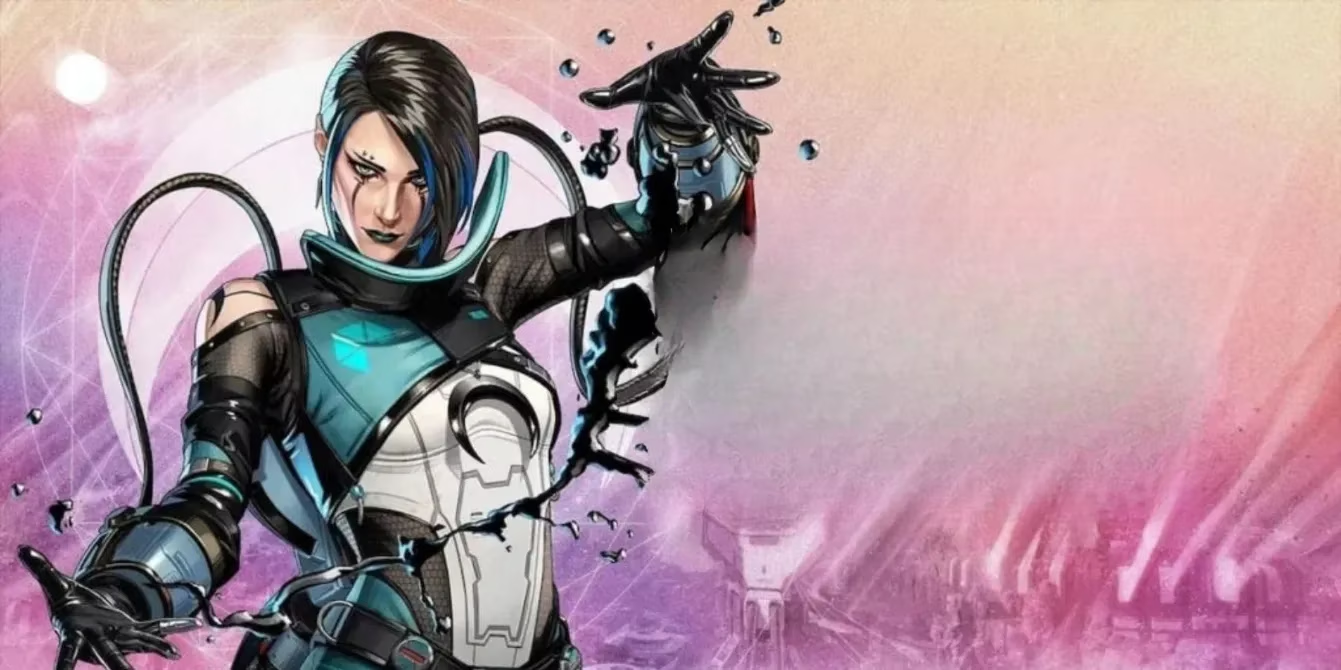
Respawn didn't just add "first trans Legend" to a bullet point; they crafted a character with a backstory that actually involves protecting the moon Cleo, which is way cooler than my own career trajectory. The lead writer and Catalyst’s voice actor confirmed she's a trans woman, and suddenly my typical strategy of running into gunfire while screaming became slightly more profound. I spent an embarrassing amount of time in the firing range just listening to her voice lines, pondering how a ferrofluid-wielding witch could also be a massive win for the LGBTQ+ community. That's the beauty of it: she's not a "representation trophy." She's a terrifying opponent who can reshape the map while also reshaping conversations. It's 2026 and Catalyst still gets regular play; that's staying power.
Now, let's rewind to a game that broke me emotionally and then broke me again with a transgender character who deserved a thousand hugs. I'm talking about Lev from The Last of Us Part II.
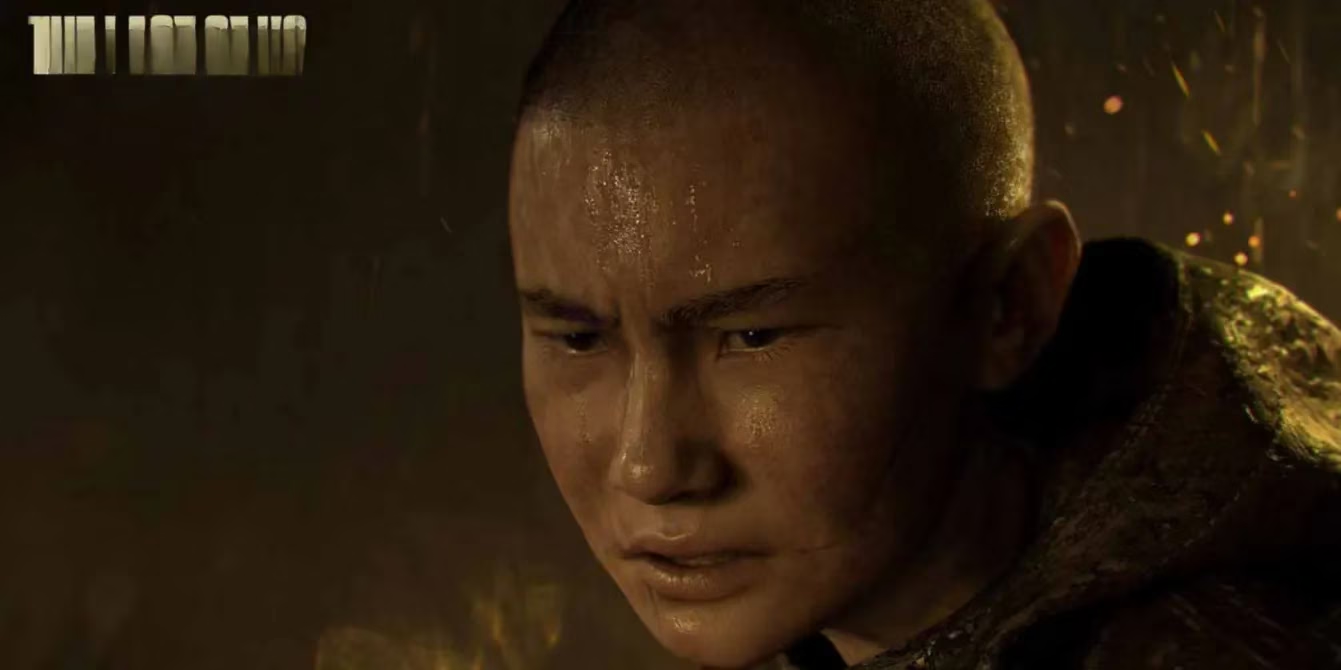
Look, I was already sobbing over Abby's biceps and Ellie’s guitar strings when Lev entered the narrative. A trans teenage boy navigating a post-apocalyptic world overrun with mushroom zombies and even scarier human zealots? That's a recipe for storytelling that lodges in your gut. Sure, the in-game community he's from—the Scars—deadname him and force him out, which sparked conversations about whether depicting transphobia in media is necessary. Honestly, playing through those sections in 2026 still feels like a necessary punch to the heart. Lev isn't defined by that trauma, though; he's defined by his fierce loyalty, his quiet wisdom, and the fact that he makes me want to throw a brick at any enemy that so much as looks at him wrong. He's a huge part of why TLOU2 remains a cultural touchstone.
Before I get too teary, let's jump back a bit to a game that gave us a sly historical wink and a trans man who deserved way more screen time.
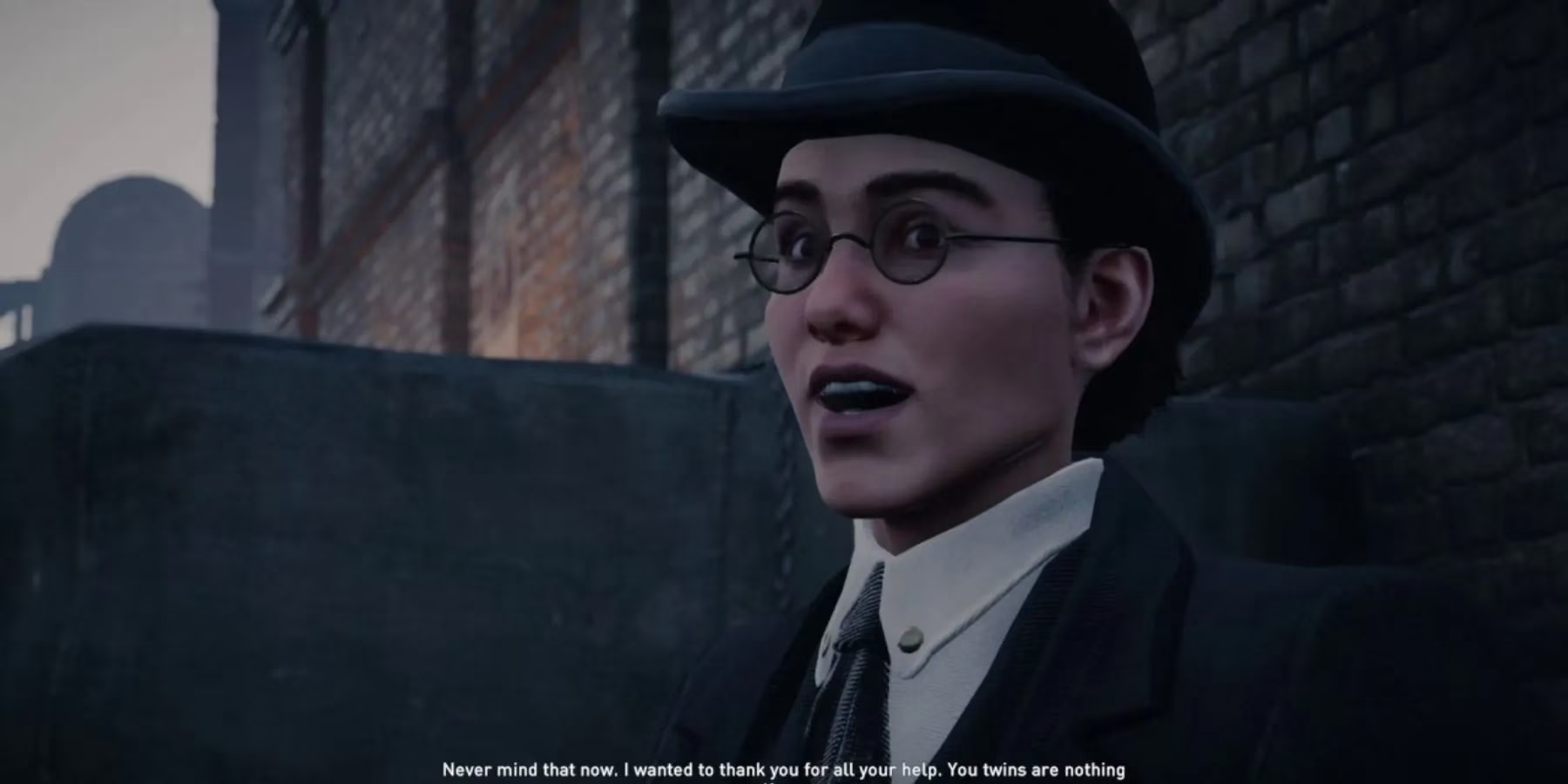
Ah, Assassin's Creed Syndicate: the one where you could parkour across London in a top hat and start gang wars. Nestled in that smoggy environment was Ned Wynert, a trans man based on an actual historical figure. Ubisoft's goal was inclusion, and they did a solid job, even if Ned's potential side-mission chain got cut. Cut! Like a rope ladder over a Thames puddle. It's the classic "great character, minor role" situation that makes you sigh into your tea. Since then, Odyssey flirted with same-sex pairings before awkwardly forcing a heterosexual baby-making questline (hello, narrative whiplash), and Valhalla let you pick Eivor's gender without tying romance to chromosomes. By 2026, I'm still dreaming of an AC game where a trans protagonist gets a full saga. Ned walked so future characters could sprint across rooftops.
Speaking of BioWare and characters that made me scream "YOU ARE PRECIOUS," let's talk about Cremissius "Krem" Aclassi from Dragon Age: Inquisition.
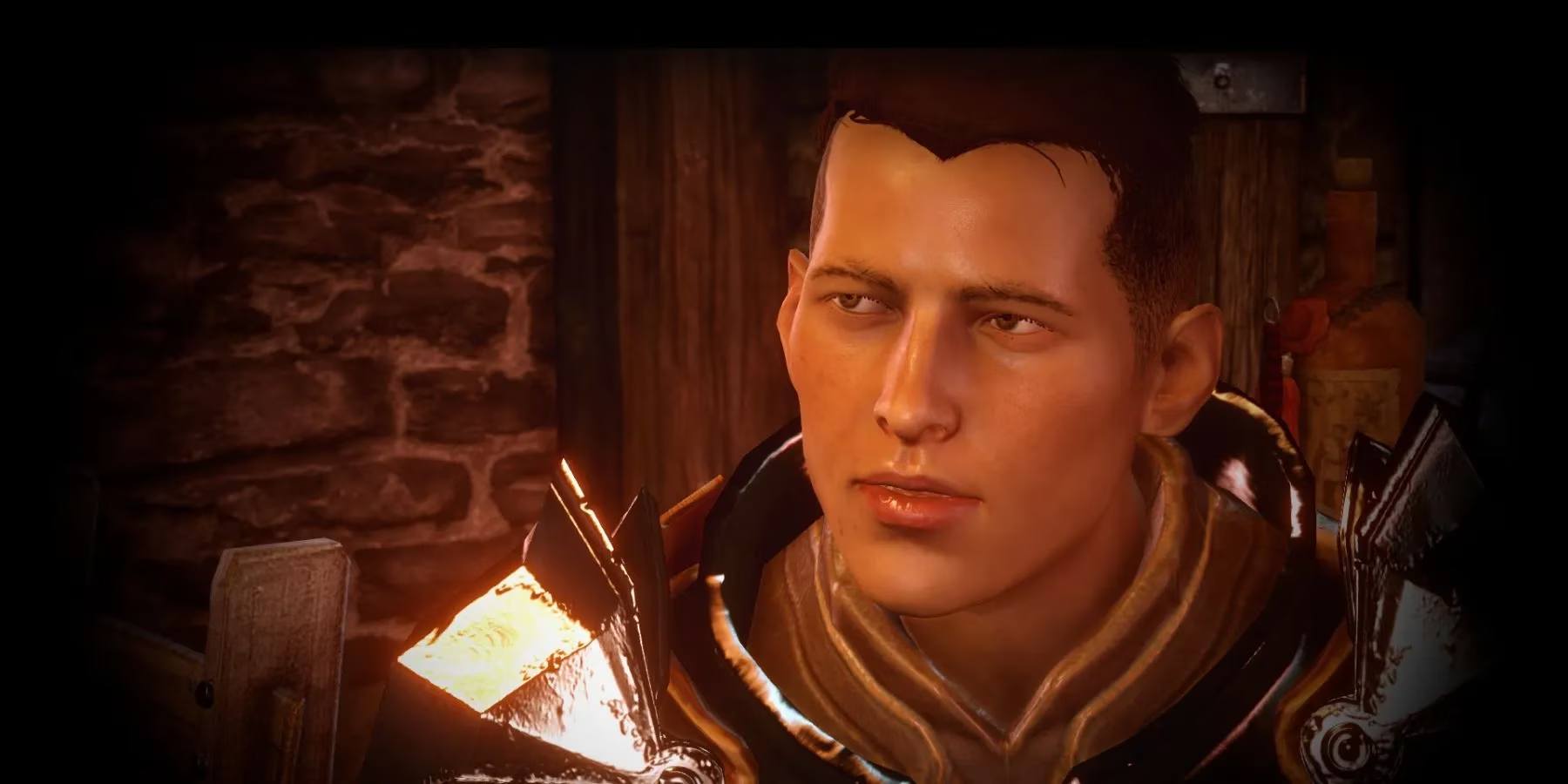
Krem is the Iron Bull's second-in-command and a trans man whose existence is handled with the kind of matter-of-fact respect that makes my lore-nerd heart sing. There's a conversation where Bull mentions the Qunari concept of "born as one gender but living like another," and suddenly my Inquisitor is blinking back tears while trying to figure out if they brought enough potions for the next dragon fight. Krem is inspirational because he's not a spectacle; he's a capable mercenary who happens to be trans. In a world full of demons, fade rifts, and Solas’s egg-shaped angst, Krem just fits. BioWare set a standard here, and every time I replay DAI in 2026 (and I have, many times, don't judge), I appreciate him more.
Now, let's slide into a more colorful, hand-drawn world where anthropomorphic animals deal with existential dread and capitalism: Night in the Woods. I discovered this gem late and immediately fell in love with its characters, especially a certain goat.
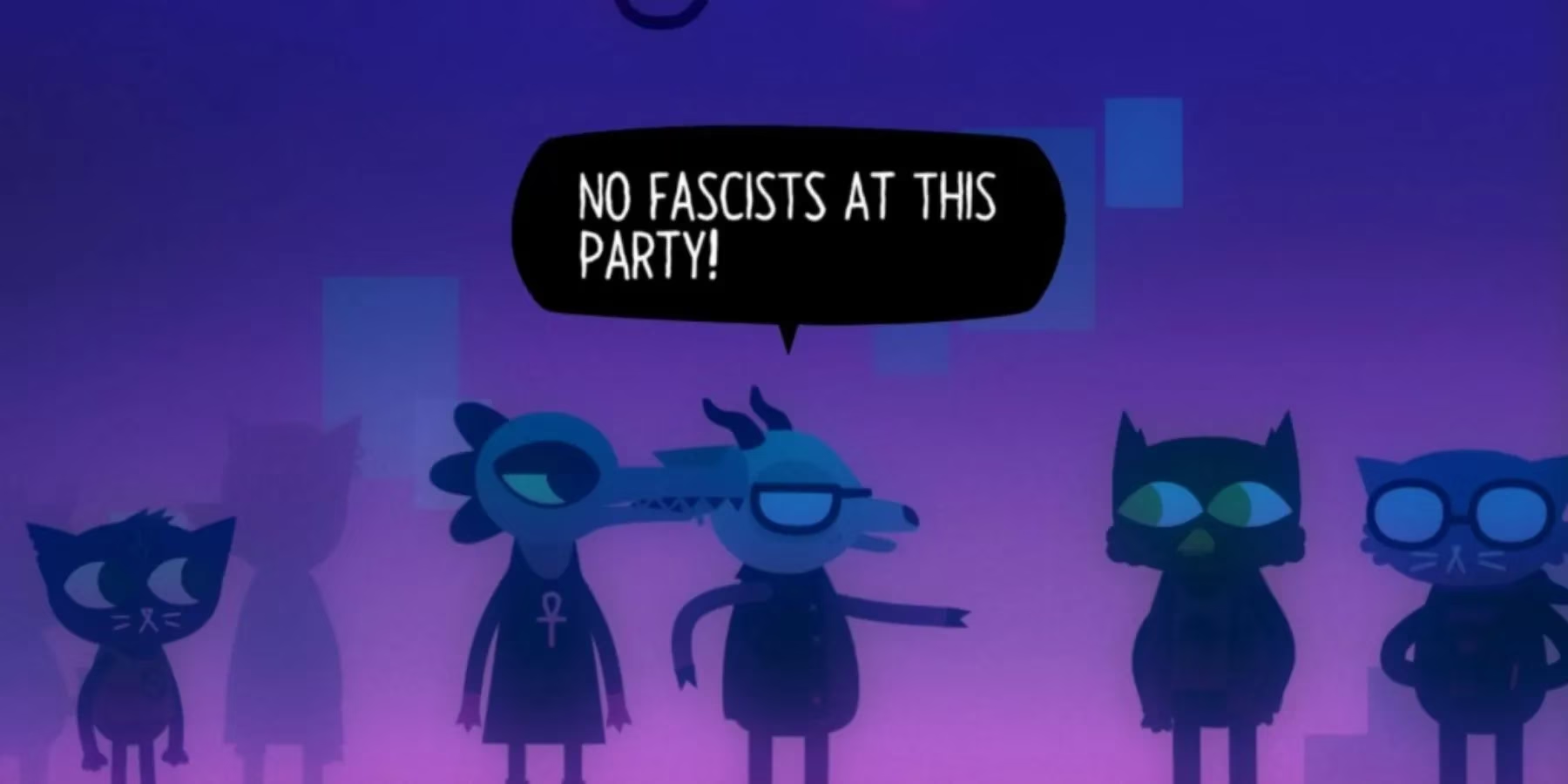
Bea's friend Jackie is a tan goat with black horns who's confirmed to be a transgender woman. The creator, Scott Benson, mentioned on CuriousCat (remember that platform?) that her trans identity was supposed to come up naturally but got lost in rewrites. Classic indie development chaos. Nevertheless, Jackie stands as a quiet landmark. In a game where the protagonist Mae is pansexual and you can hang out on rooftops contemplating the void, Jackie’s presence adds another thread of authenticity. It’s a reminder that representation doesn't always need a neon sign; sometimes a goat friend’s identity is just part of the fabric. And that fabric is made of feelings.
Finally, let’s zip over to the San Francisco Bay Area circa Watch Dogs 2, a game that decided inclusion wasn't just a side mission but the whole dang operating system.
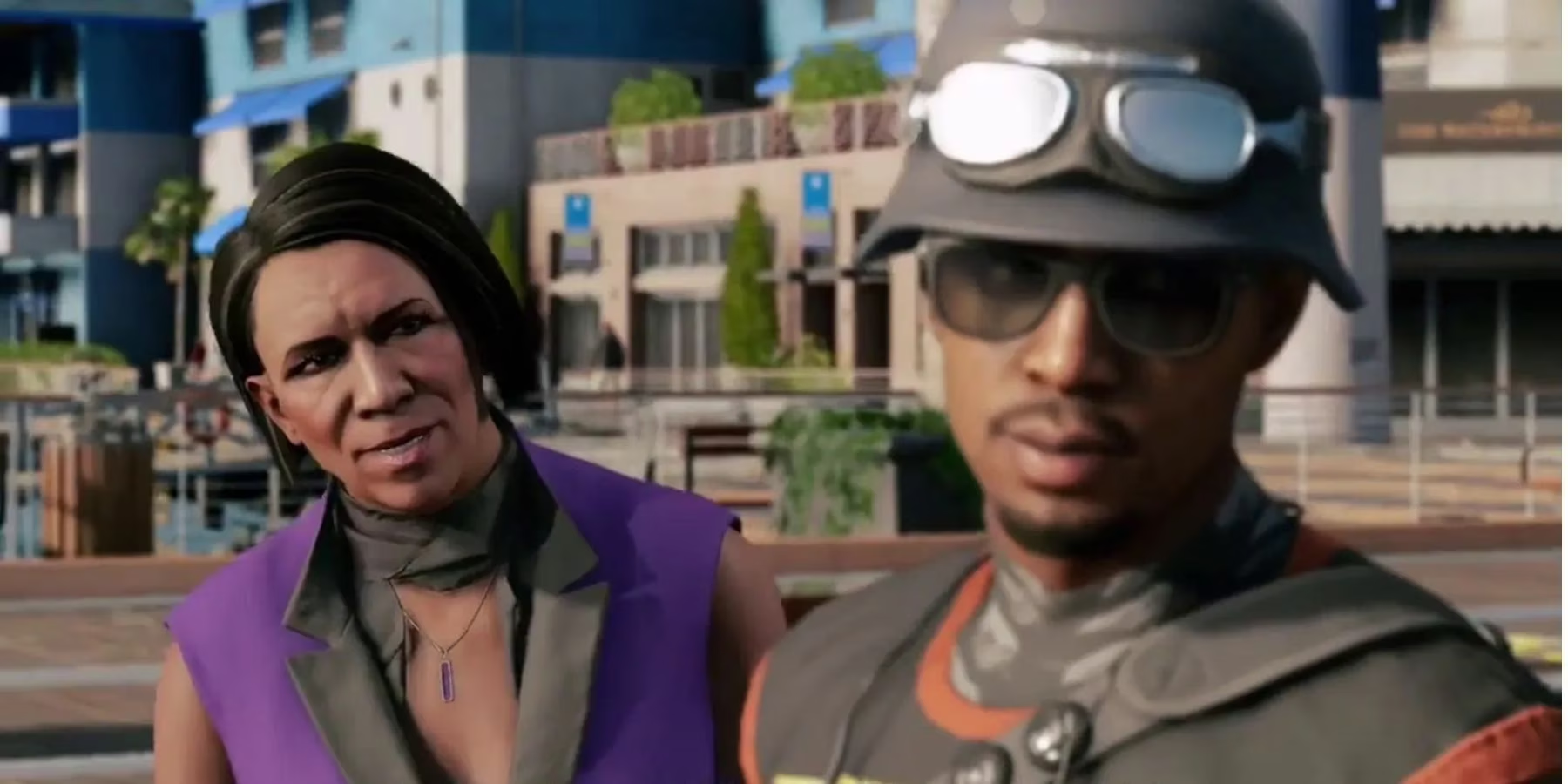
Miranda Comay is a supporting character who is confirmed to be a transgender woman. She's also a city councilwoman navigating DedSec’s chaotic hacktivism, which means she's got more patience than me after my 5th attempt at a stealth mission. Watch Dogs 2 really spread its inclusive net wide: we got people of color, female characters in leading roles, and Josh, who has Asperger's Syndrome. The game checked boxes but never felt like a checklist. Instead, it presented a vibrant, diverse version of San Francisco where I could hack a bulldozer while also interacting with folks who felt real. Miranda is part of that tapestry, and in 2026, when I look back at how games handle intersectionality, she's a testament to the fact that you can make a goofy open-world game with heart.
So, where does that leave us in 2026? We've had almost four years since that original list was updated, and while I won’t pretend the industry has solved everything, the trajectory is encouraging. We still see games where character creators lock you into tired binaries, or where trans identities are implied but never confirmed (shout-out to community debates that fill entire forums). However, the dialogue has shifted. Developers are more willing to hire sensitivity readers, voice actors from within communities, and writers who understand that a character's gender identity isn't a plot twist—it's part of who they are.
I want to be clear: these are all characters confirmed to be transgender by their creators. No assumptions, no headcanon that spiraled out of control. Because that distinction matters. It means that when I'm playing as Catalyst, I’m not just projecting; I’m witnessing deliberate representation. And when I’m sobbing over Lev, I know the writers intended that resonance.
At the end of the day, I’m just a player who wants more stories that reflect the beautiful mess of humanity. Inclusion isn't about making me comfortable—it's about making sure anyone who picks up a controller can see themselves as the hero, the anti-hero, or at least the cool goat friend. Here’s to more Levs, Krem’s, and Catalysts. And please, no more babies forcibly shoehorned into my romantic choices. It’s 2026; I can adopt a space hamster in Mass Effect and that’s enough.
Now if you’ll excuse me, I have to go replay Stardew Valley and platonically roommate with Krobus again, because some relationships transcend societal expectations entirely.
🕹️💖
Data referenced from PEGI helps contextualize why thoughtful trans representation (like Catalyst’s confident voice lines or Lev’s harrowing coming-of-age) hits differently depending on a game’s intended audience and content boundaries—because ratings frameworks often shape what themes studios feel comfortable depicting, how explicitly identities are discussed, and whether difficult topics like discrimination are shown on-screen or handled more subtly in dialogue and optional lore.