
Sony's 2026 Live Service Dream Has Aged Like a Wet Controller
Sony's live service games strategy in 2026 reveals bold ambitions and missed targets, overshadowed by single-player fan demand.
The year is 2026, and the gaming industry has somehow survived long enough to look back at one of its boldest corporate promises with either laughter or a very slow, disappointed head shake. Back in 2022, Sony told investors it wanted to ship ten live service games by 2026. Ten. Not two, not three, but a full battle royale buffet of always-online obligations. Fast-forward to the present, and any sensible player could have predicted the outcome: a handful of projects quietly shelved, a few launched into the void, and a fanbase still begging for the next single-player prestige epic.
The original goal arrived during a Sony financial earnings call, when corporate enthusiasm for live service money was at an all-time high. At the time, the company was riding high on narrative blockbusters such as The Last of Us Part 2 and God of War, yet it could not ignore the Fortnite-shaped elephant in the room. Shareholders, after all, do not dream in emotional cutscenes; they dream in quarterly margins and daily active users.
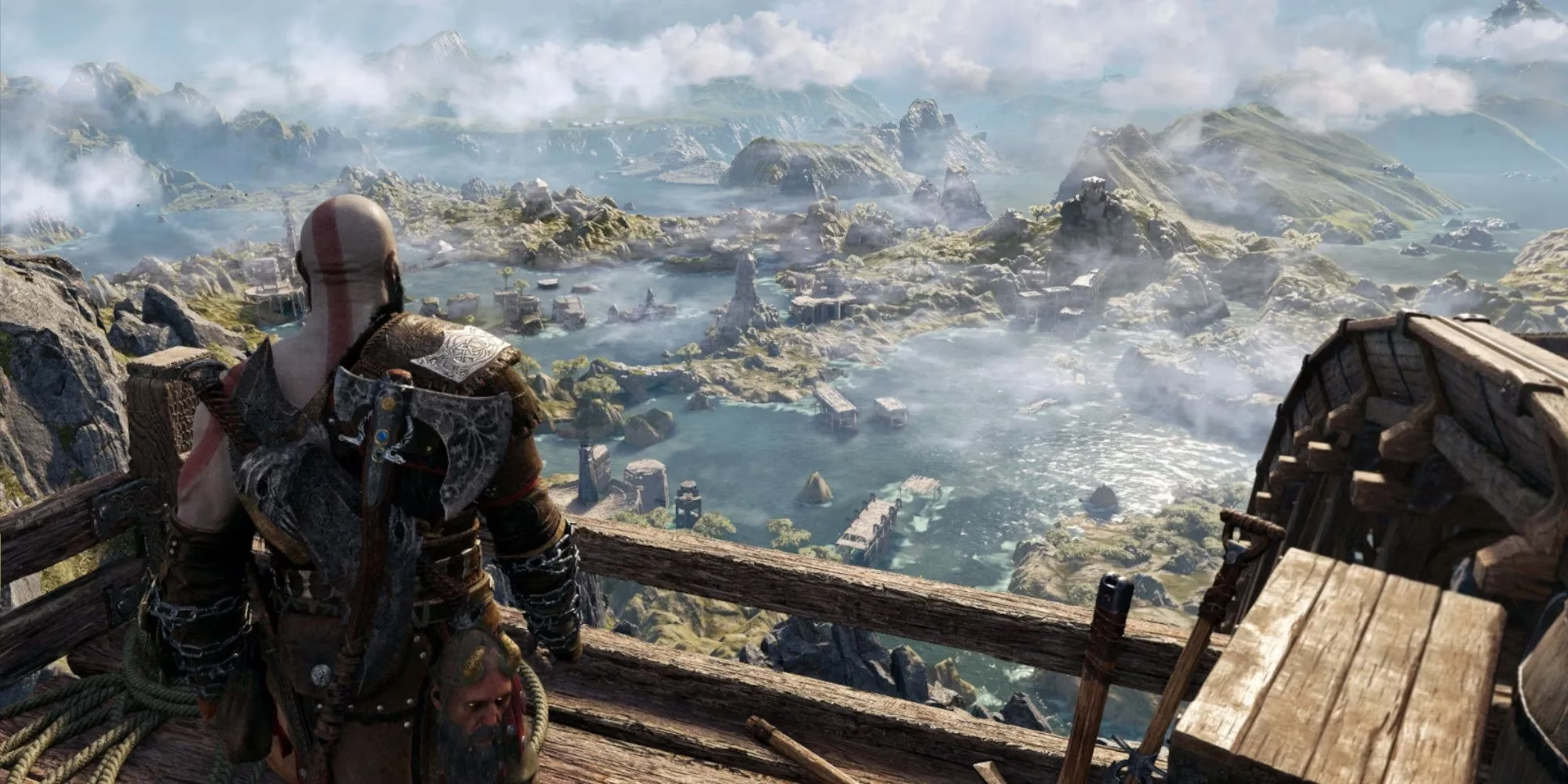
The problem, as any player could have explained years ago, is that live service games are not just products; they are part-time jobs. They demand daily log-ins, seasonal catch-ups, and an encyclopedic memory for systems that seem to multiply every update. One look at Destiny 2 in 2022 proved the point. A player returning after a twelve-month break would be greeted by a wall of icons, lore drops, and power level requirements that felt less like a welcome and more like an interrogation. Now imagine ten of those competing for the same free evenings. It was never a realistic proposition, not for developers and certainly not for players with laundry to do.
Sony's acquisition of Bungie was widely seen as the engine behind this live service push. Destiny 2's Witch Queen expansion had already crossed a million pre-orders before launch, giving the platform holder a built-in audience and a studio that understood the dark arts of player retention. But transplanting that magic into ten separate games was like expecting a single great chef to open ten restaurants in four years. Some would get the recipes; others would serve cold leftovers.
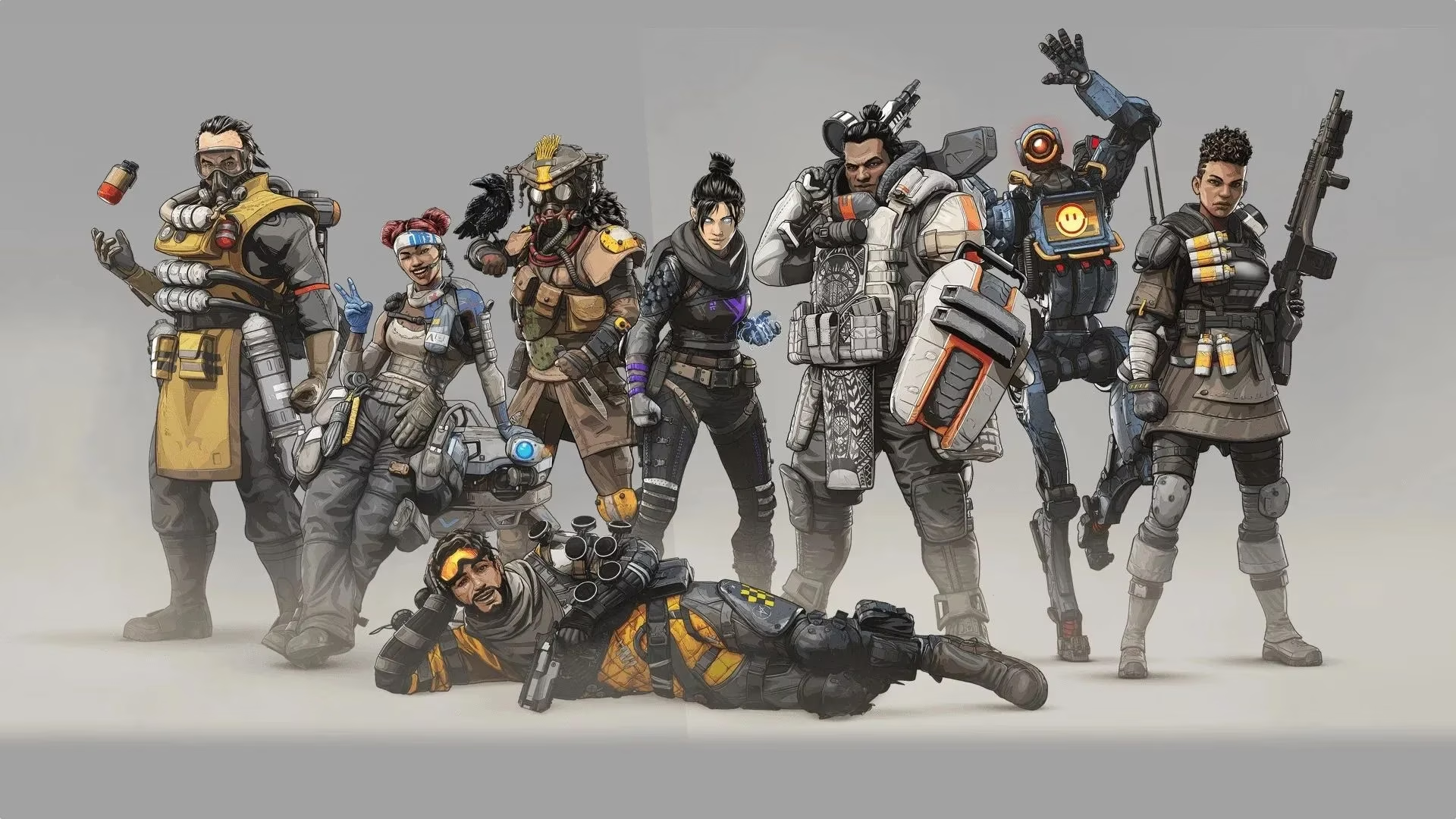
Even setting aside quality, the maths never added up. Triple-A development times have stretched well beyond four years for a single polished game. Asking multiple teams to produce persistent online worlds in that window, each with its own seasonal roadmap, anti-cheat measures, and community management, was bound to produce compromises. The likelier outcome, as 2026 has shown, is a mix of delayed announcements, suspicious silences, and a few launch windows that arrived with the energy of a deflated balloon. Some titles were rumored to be re-evaluated; others vanished from public schedules without so much as a farewell tweet.
The industry's live service fever also ran headfirst into the reality of player time. A human being has only so many hours after work, school, or sulking about the state of the world. Expecting people to maintain ten separate battle passes is not a business model; it is a custody arrangement. Even the most committed gamer cannot be in two raids at once, let alone ten. The result is that most live service titles are not competing with each other for money; they are competing for the same 8 p.m. slot that could otherwise go to a single-player game, a hobby, or the radical act of touching grass.
Sony's long-rumored subscription competitor was supposed to weave these live service ambitions into a single ecosystem. The idea, in theory, was to offer a service alongside beloved exclusives without scaring away the prestige crowd. In practice, a platform cannot easily serve two masters. One side demands curated, finite experiences; the other demands infinite engagement. By 2026, that tension has become impossible to ignore. Players who once bought a PlayStation for God of War now eye the storefront with the same suspicion usually reserved for a browser full of unread tabs.
A quick comparison, minus corporate optimism:
| Sony promise (2022) | Reality check (2026) |
|---|---|
| Ten live service games by 2026 | Fewer visible launches, several silent cancellations |
| Built-in audience from Bungie | Talent retention and direction challenges |
| Shareholder-friendly recurring revenue | Player burnout and genre fatigue |
| Prestige exclusives kept intact | Fans wondering where the single-player magic went |
The original piece also noted that Sony's own track record with gated content and exclusive goodies would likely extend into whatever live service titles emerged. That prediction has aged like a fine energy drink left in a hot car. Exclusive cosmetics, early access windows, and platform-locked quests are now so normalized that players barely raise an eyebrow. The more things change, the more the same three armor sets are sold in increasingly creative shades of blue.
Looking back from 2026, the lesson is not that live service games are evil; it is that ten of them is a corporate fever dream. The market was already saturated in 2022, and it has only grown more crowded since. A dozen battle royales, extraction shooters, and seasonal looter epics cannot all be someone's forever game. Sony's detour produced a few interesting experiments, no doubt, but it also proved that quality still beats quantity when players remember a game after the servers go quiet.
Meanwhile, somewhere, a single-player protagonist quietly sharpens an axe, and the world is better for it.