
The Live-Service Shake-Up: Why So Many Games Are Shutting Down in 2026
The 2026 gaming landscape is witnessing a sobering wave of live-service game shutdowns, sparking urgent debate about the future of this dominant model. This alarming trend, driven by market saturation and the finite nature of player time and money, signals a critical market correction for the industry.
The gaming landscape in 2026 is witnessing a significant and sobering trend: a wave of live-service game shutdowns. Just last week, multiple titles announced their impending closures, from the recent battle royale experiment Rumbleverse to the long-standing VR social hub Echo VR. While some closures were planned, the sheer number of announcements has sent ripples through the gaming community, sparking widespread concern and debate about the future of the 'games as a service' model that has dominated the industry for nearly two decades. 🎮💥
A Sudden Wave of Goodbyes
The list of casualties is both surprising and telling. It includes titles that barely had time to find their footing. Rumbleverse, Epic Games' quirky brawler battle royale, is shutting down servers after a mere six months of operation. PlatinumGames' much-anticipated action-RPG, Babylon's Fall, is ending service in February, barely a year post-launch. The first-person shooter CrossfireX will be gone by May. Even established titles with dedicated fanbases weren't immune; the dodgeball-inspired multiplayer hit Knockout City is ending its official service, though a private server version will live on. This follows high-profile shutdowns from just a couple of years prior, like Apex Legends Mobile and Marvel's Avengers, which couldn't sustain themselves beyond a few years.
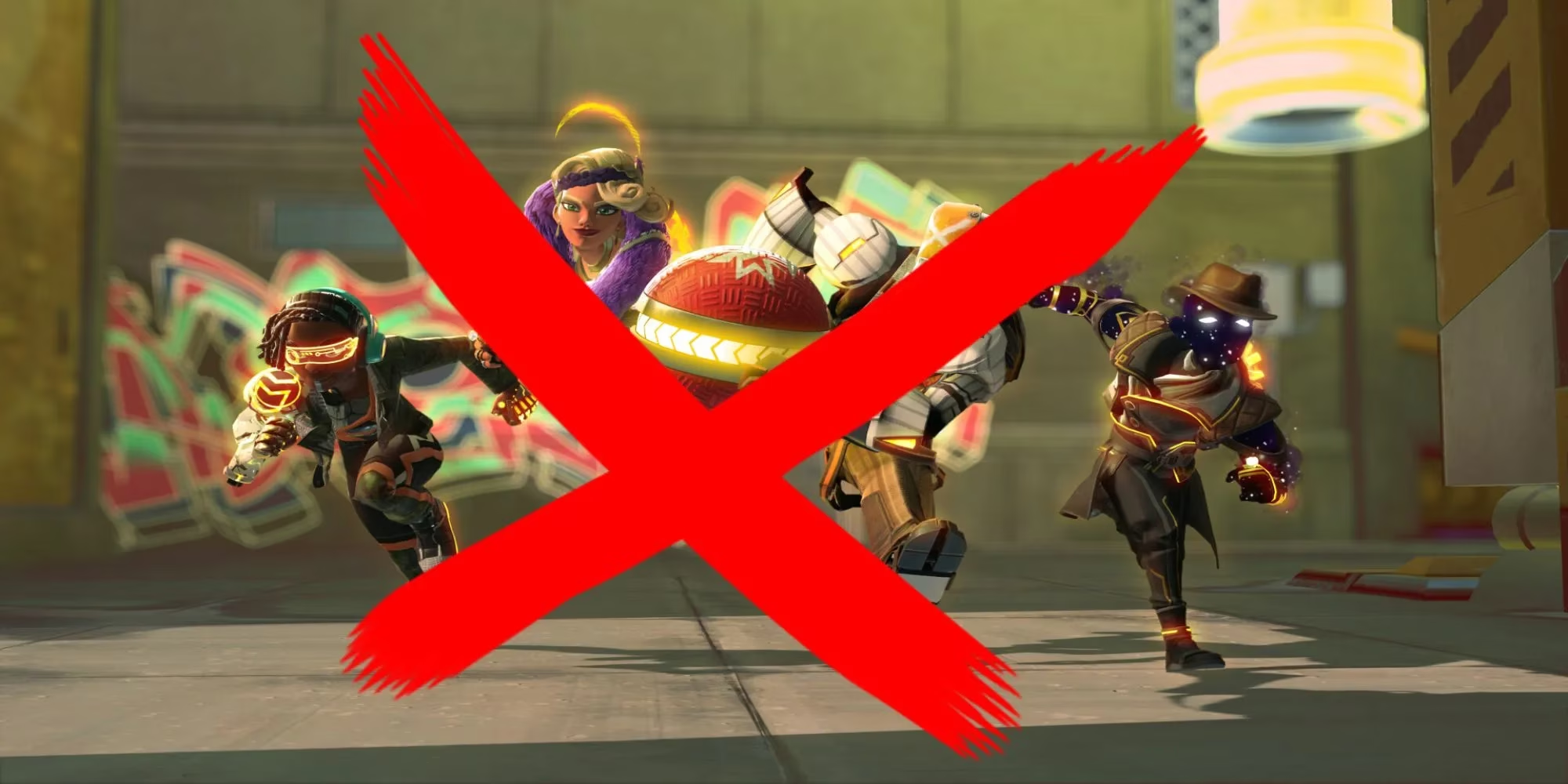
What's truly alarming is that quality isn't always the deciding factor. Knockout City, for instance, was critically praised for its innovative blend of dodgeball and RPG mechanics—a niche it virtually owned outside of Dodgeball Academia. Its closure signals that a great concept and solid gameplay are no longer a guaranteed ticket to longevity in the oversaturated live-service market.
The Live-Service Bubble: A Market Correction in Action
To understand why this is happening now, we need to look at the economic forces at play. The monumental, decade-spanning success of titans like World of Warcraft, League of Legends, and Fortnite created a gold rush mentality. Every publisher and developer wanted their own perpetual revenue stream. This led to a massive influx of live-service titles over the past decade, inflating what can only be described as a speculative live-service bubble.
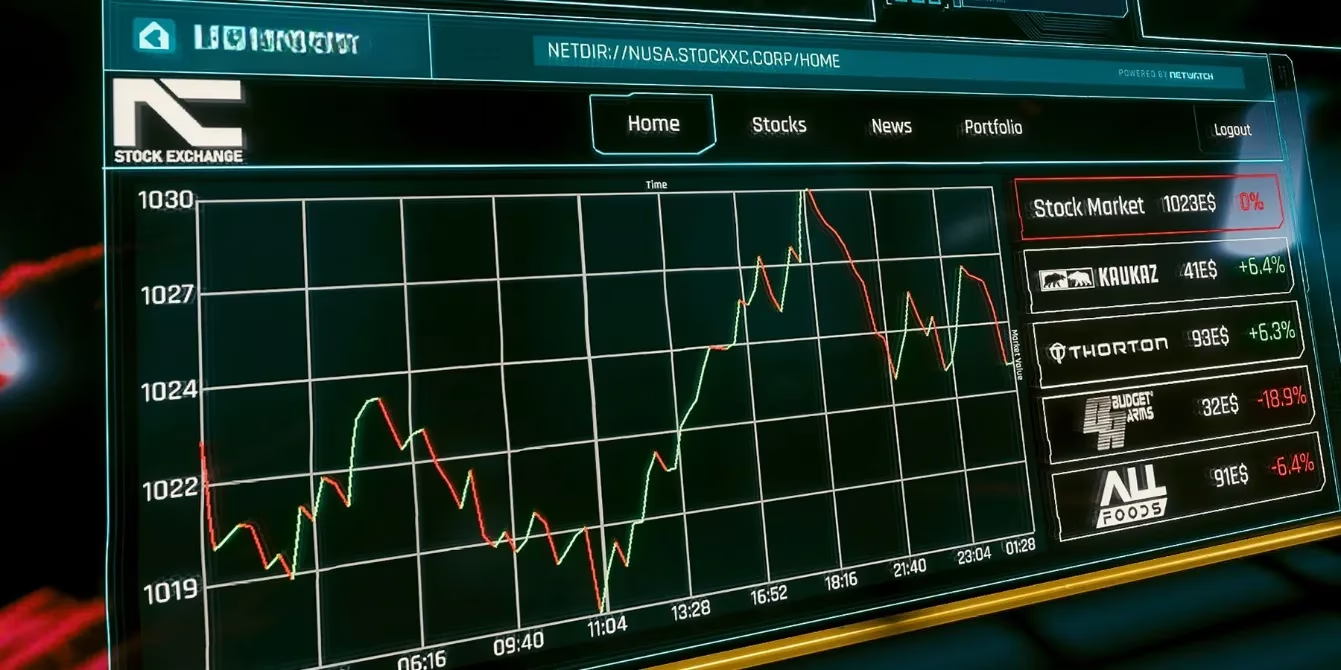
In economics, a speculative bubble forms when investment in an asset class becomes unsustainable, driving perceived value far beyond its actual worth. When the market corrects itself, the bubble bursts. In gaming, the primary investors aren't just venture capitalists—they're the players themselves, investing their money, and more critically, their time.
Here's the core issue the market is now correcting:
-
Player Time & Money are Finite Resources: A player can only actively engage with so many games that demand daily logins, seasonal battle passes, and constant content updates.
-
Economic Pressure: With general economic trends still applying pressure on disposable income, players are becoming more selective about where they invest their ongoing subscriptions and microtransactions.
-
Market Saturation: There are simply too many games competing for the same slice of the pie.
The bubble is bursting. The market is correcting to reflect what these live-service ventures are actually worth in a crowded, competitive, and financially cautious environment. The franchises with the deepest pockets and most entrenched player bases—your Genshin Impacts, Rainbow Six Sieges, and Warframes—can weather the storm. But for new IPs or mid-tier projects, the math has become brutal.
The High Stakes of Servers and Salaries
For a live-service game, launch is just the beginning. The real marathon is the ongoing cost of:
-
Server Maintenance (24/7/365)
-
Content Development (new seasons, characters, maps, events)
-
Community Management & Support
-
Marketing to retain and attract players
When player investment (through battle passes, cosmetics, etc.) dips below the cost of these operations, the clock starts ticking. For a game like Back 4 Blood, whose developer Turtle Rock Studios announced the end of development earlier this month, the prospect of mounting server costs without sufficient revenue leads to an inevitable conclusion: pulling the plug to avoid deeper losses, unpaid bills, and more layoffs.
What Does This Mean for the Future of Gaming?
So, is this the end of the live-service era? Not exactly. But it does signal a major maturation and consolidation. The 'throw everything at the wall and see what sticks' approach is dying. The bar for success is now astronomically higher.
Going forward, we can expect:
-
Fewer, More Polished Launches: Publishers will be far more risk-averse, greenlighting only live-service projects with immense confidence, unique hooks, and solid long-term plans.
-
A Focus on Sustainability: The discourse will shift from pure player count to player investment and retention metrics. Games will need to prove they can maintain a healthy, paying community.
-
Innovation in Monetization: The standard battle pass/store model may evolve as developers seek less invasive or more player-friendly ways to generate sustained revenue.
-
A Renaissance for 'Complete' Games: This shake-up could create more space for premium, one-time-purchase games that tell a full story and don't demand endless engagement. Players burned out on live-service obligations may flock back to these experiences.
The survivors of this current wave are watching closely. While Sea of Thieves or Genshin Impact seem healthy today, the landscape has proven that stability is fragile. For players, the message is clear: the era of taking your favorite live-service game's future for granted is over. Every login and every purchase is now a vote for which worlds get to continue existing. The market has spoken, and it's demanding quality, respect for player time, and sustainable business models above all else. The great live-service consolidation of 2026 is underway, and its effects will shape the games we play for years to come. 👀✨