
The Ultimate Guide to FPS Games That Thrive on Voice Communication in 2026
First-person shooter games like Apex Legends and CS:GO thrive on teamwork and voice chat, turning chaotic battles into unforgettable, strategic victories.
As an avid first-person shooter player, I've come to realize that the true soul of the genre often lies not just in sharp aim or fast reflexes, but in the crackle of a teammate's voice cutting through the chaos of battle. While many games offer a serviceable solo experience, the magic truly ignites when a squad coordinates with clear, concise, and sometimes frantic communication. Voice chat transforms these digital battlefields from isolated skirmishes into collaborative, cinematic, and intensely rewarding experiences. In 2026, the games that master this blend of communication and combat continue to offer some of the most memorable moments in gaming, where a well-timed callout or a coordinated push can feel as satisfying as any victory screen.
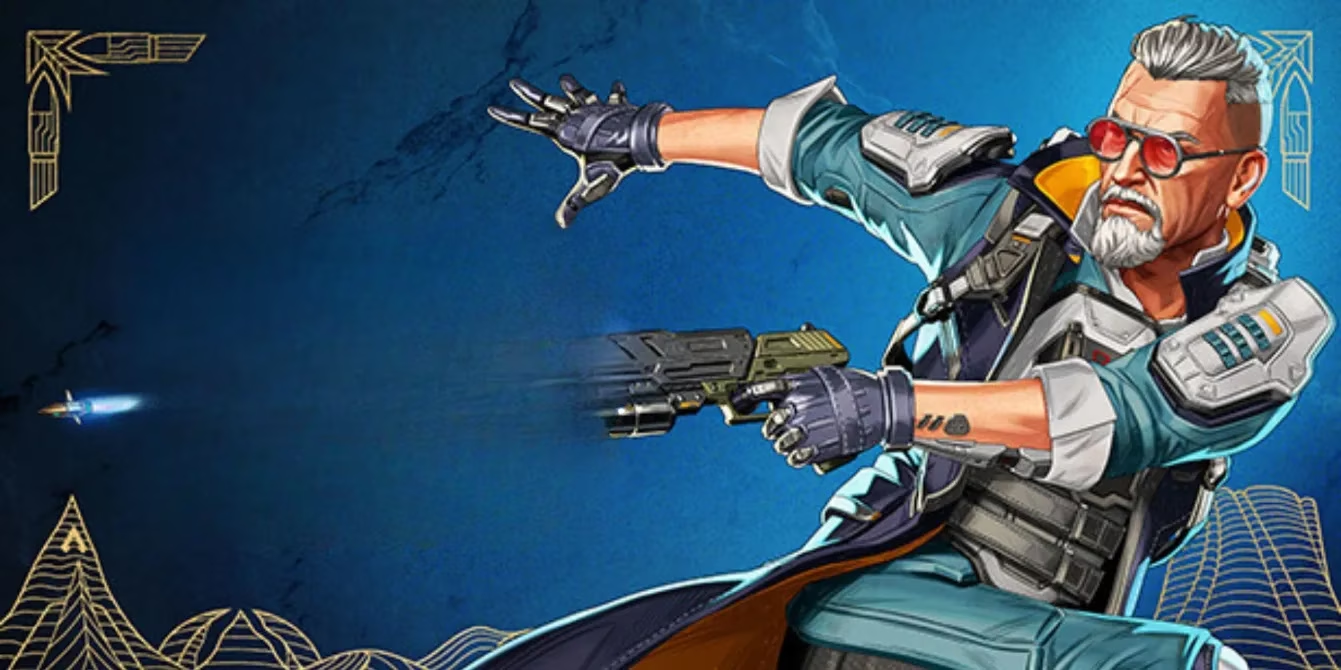
Let's start with the high-flying, futuristic chaos of Apex Legends. Dropping into this vibrant battle royale with a squad, I find that voice chat isn't just helpful—it's the engine for our success. Coordinating the activation of our unique Legend abilities is crucial. 🎯 A perfectly timed Gibraltar dome shield combined with a Bangalore smoke barrage can turn a dire situation into a strategic masterpiece. The scale of the maps means teammates can easily get separated; without clear comms, you might suddenly find yourself in a hopeless 3 vs 1. Calling out enemy positions, planning rotations, and syncing ultimates are all actions that feel clunky with pings alone but become fluid and powerful through voice.
For pure, unadulterated tactical shooting, few games demand communication like Counter-Strike: Global Offensive. Even years after its release, its influence is undeniable. Every round is a tense puzzle of economy management, site execution, or retake strategy. Playing CS:GO silently feels like playing chess while blindfolded. With voice chat, however, the game sings. My team can relay concise, critical information in real-time: "One AWP watching Long," "Smoking mid, flashing in," "Last seen low health kitchen." This constant stream of intel allows for sophisticated strategies and split-second adaptations. The difference between a silent team and a communicative one isn't just a few more wins; it's the difference between feeling like a group of individuals and operating as a single, cohesive unit.
Here’s a quick comparison of communication styles in tactical shooters:
| Game | Primary Communication Need | Typical Voice Chat Style |
|---|---|---|
| Counter-Strike: GO | Precise, rapid callouts & economy planning | Crisp, short, information-dense |
| Rainbow Six Siege | Detailed operator ability coordination & destruction planning | Methodical, strategic, layer-by-layer |
| Insurgency: Sandstorm | Squad positioning & intel without radar | Immersive, tense, reliant on verbal descriptions |
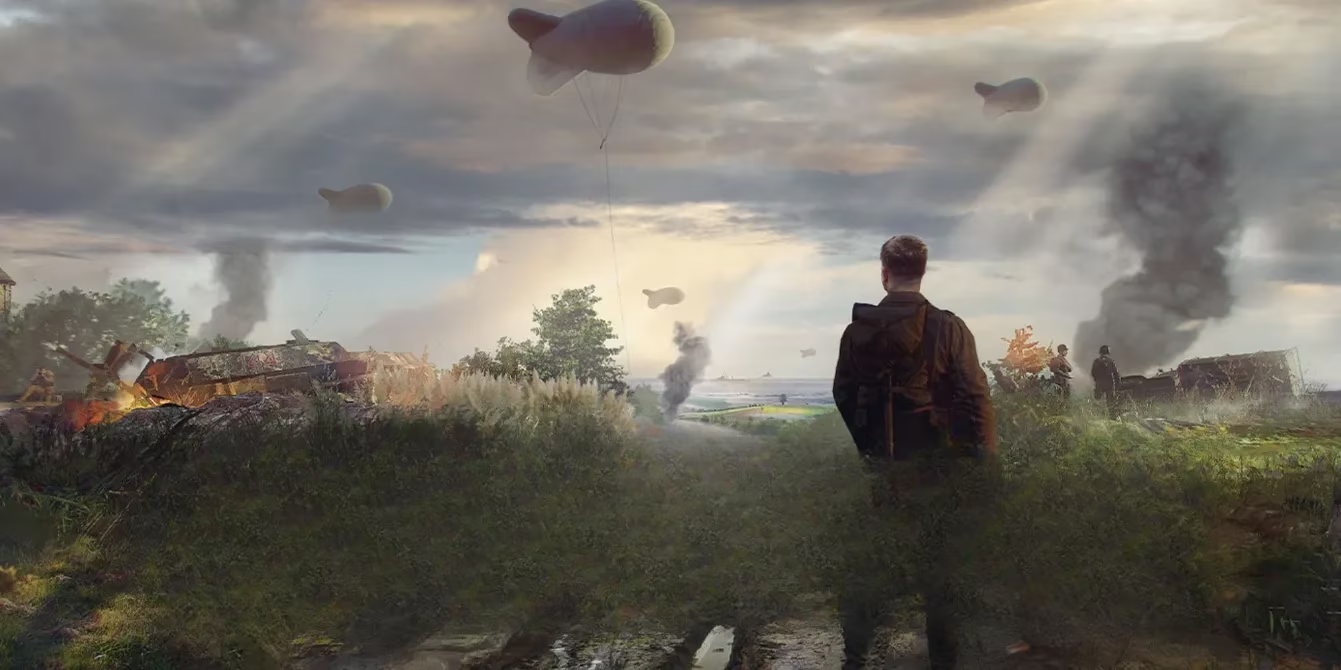
If you want to feel like you're in a historical documentary, Hell Let Loose is your game. This isn't just an FPS; it's a large-scale WWII simulation where communication is the chain of command. My experience involves constant chatter on three levels: within my infantry squad, with my squad leader, and between squad leaders and the overall commander. 🗺️ Calling out tank movements, requesting artillery support, or coordinating a flank across an open field—all of this requires clear, continuous voice chat. The game can be played without it, but you'd miss the incredible immersion. With the right group, the role-play element emerges naturally, creating moments of genuine drama and camaraderie that are straight out of a epic war film.
The gritty, modern combat of Insurgency: Sandstorm offers a different kind of tension. There's no minimap radar or UAV to hold your hand. Your awareness of the battlefield comes entirely from your own eyes and, crucially, the voices of your teammates. "Contact, second-story window, white building, north!" This kind of callout is lifesaving. The gunfire is loud, the environments are cluttered, and enemies can be anywhere. Voice chat becomes your squad's nervous system, transmitting vital sensory data. The radio filter on the voice chat adds an incredible layer of immersion, making every piece of communicated intel feel urgent and real, as if you're truly part of a modern fireteam.

In the vibrant, ability-based arenas of Valorant, communication is the key to unlocking advanced play. Knowing an enemy's location is paramount, and since each player holds a piece of the map's information, sharing it instantly via voice is non-negotiable. The community has developed a rich lexicon of codewords and callouts for every nook and cranny of each map. Learning terms like "Hell," "Heaven," "U-Haul," or "Cubby" is essential to keeping comms fast and efficient. Beyond callouts, coordinating complex ability combos—like a Sova recon dart into a Raze Showstopper—requires precise timing that's only possible with clear verbal coordination. A silent Valorant team is a team destined to struggle.
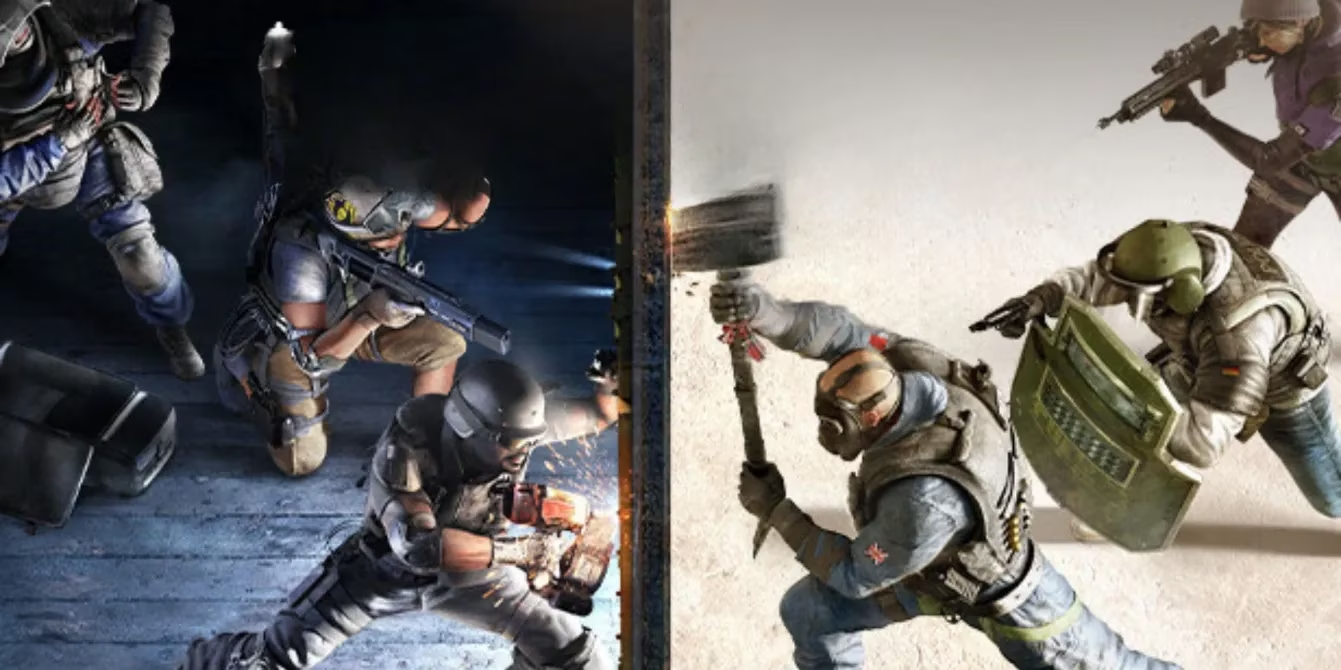
Rainbow Six Siege takes tactical communication to an architectural level. Every match is a game of asymmetric information and destruction. Voice chat is how we piece that puzzle together. "They reinforced Kids' Bedroom," "I'm breaching the soft wall from Piano," "Vigil is roaming downstairs, last seen near archives." Each operator's unique gadget means potential strategies must be verbally planned and adjusted on the fly. Without this layer of communication, Siege devolves into a lonely game of wandering and guessing, which completely undermines its brilliant team-based design. The satisfaction of executing a perfectly synchronized push, called out step-by-step over voice, is unparalleled.
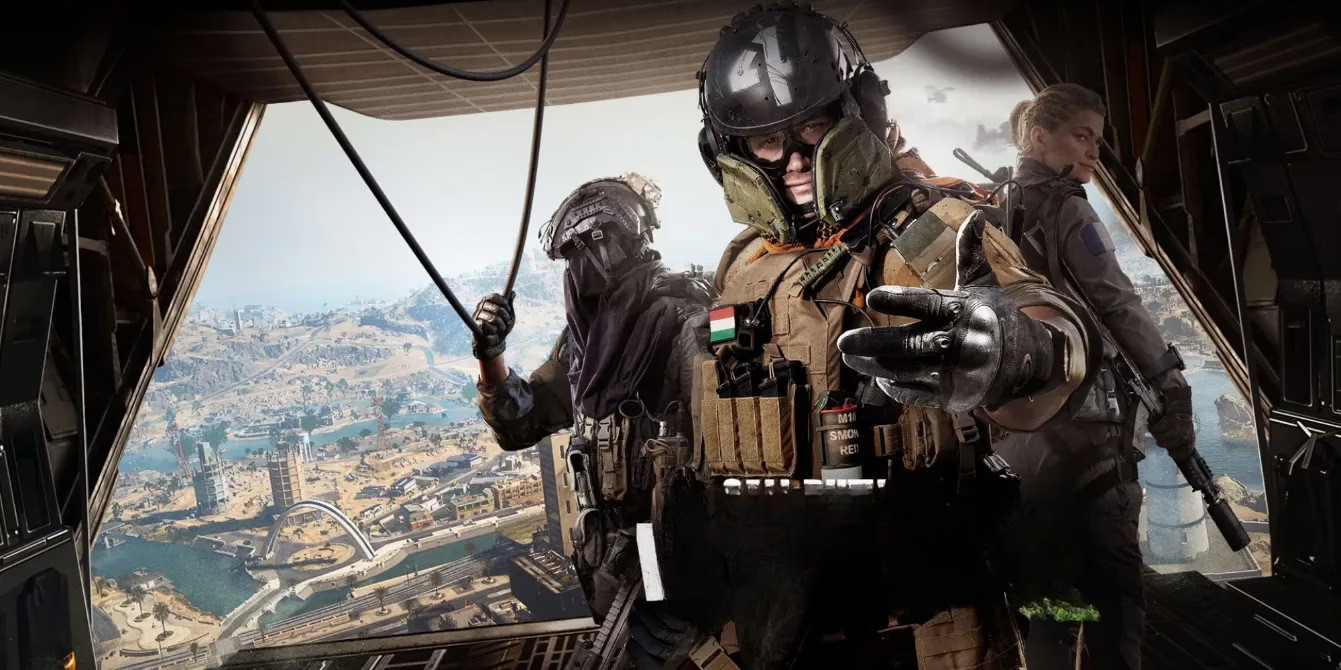
The addition of proximity voice chat in Call of Duty: Warzone added a hilarious and unpredictable social layer to the battle royale formula. Of course, communicating with my own team about loot, contracts, and enemy positions is as vital as ever. But now, I can also hear (and be heard by) nearby enemies. This has led to some of my most memorable gaming moments: trying to negotiate a temporary truce, bluffing about my squad's size, or simply sharing a laugh with an opponent before a firefight. 😄 It introduces a psychological element that makes every encounter feel more dynamic and human.
Finally, for those seeking the pinnacle of mil-sim communication, Squad stands tall. This game is built on the foundation of voice chat. It features a sophisticated radio system where you communicate locally with your immediate squad and on a separate channel with your squad leader. The scale of operations, the need for logistics, and the coordination of armored vehicles and fire support demand constant, clear communication. When everyone buys into the immersive, semi-role-play mindset, the game transcends being a shooter and becomes a powerful simulation of teamwork and leadership. The camaraderie formed through successfully executed voice-led operations is genuinely unique.
In 2026, while AI companions and advanced ping systems exist, the raw, unfiltered connection of human voice chat remains irreplaceable in these FPS titles. It's the ingredient that turns good games into unforgettable shared experiences, proving that sometimes, the most powerful weapon in your arsenal is a clear line of communication.