
The Unopened Chapters: Finding Beauty in Books and Games We Haven't Experienced
Embrace curiosity over guilt with tsundoku and antilibrary concepts, transforming unread books and unplayed games into treasures of potential and discovery.
It’s a curious quirk of human nature, this persistent whisper of shame that creeps in when we glance at books gathering dust or games languishing unplayed in digital libraries. That paperback bought with fervent intention now stands as a silent accuser; that Steam sale bargain mocks from the depths of the backlog. Yet what if these untouched treasures weren't failures of discipline but monuments to curiosity? The Japanese concept of tsundoku (積ん読) offers precisely this perspective shift – not as a pejorative label for book hoarding, but as a celebration of potential. It’s that moment when you look at your teetering stack of unread volumes and think, "Man, this isn't a mess, it's a goldmine waiting to happen."
The Gentle Art of Tsundoku
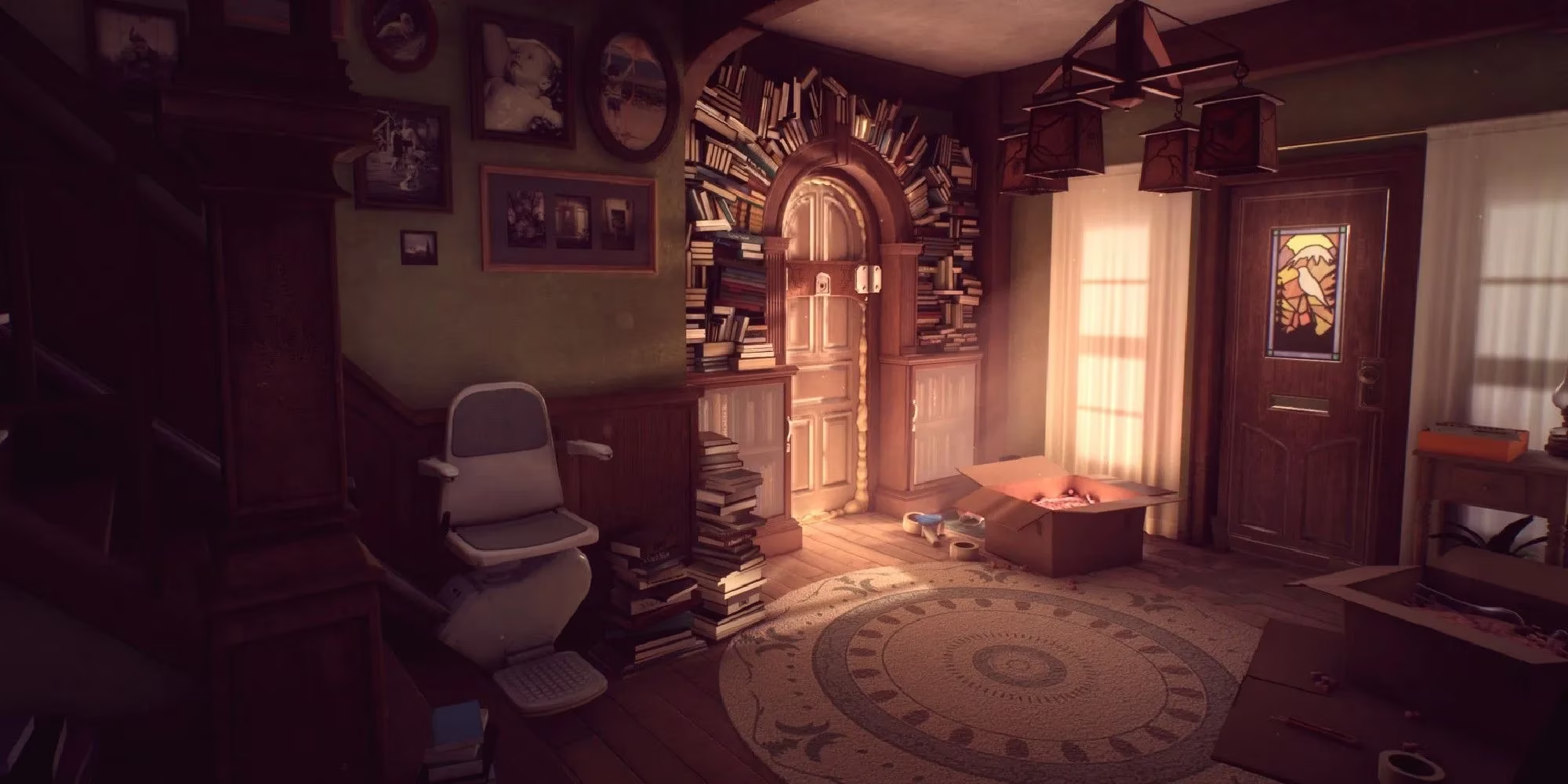
Tsundoku transforms the guilt of unread pages into an embrace of possibility. Consider the avid reader who devoured 51 books last year yet acquired 20 more that remain untouched. Where shame once lingered, now hums the quiet excitement of adventures yet undertaken. Those double-stacked shelves aren't evidence of neglect but a physical manifestation of intellectual hunger. The term’s non-judgmental nature reframes accumulation as aspirational rather than indulgent – it’s about honoring the self that sought knowledge, even if the present self hasn’t caught up yet. After all, who hasn’t felt that little thrill when spotting a forgotten title nestled between bookends? It’s like finding a twenty-dollar bill in last winter’s coat.
The Antilibrary: Wisdom in the Unknown
Nassim Nicholas Taleb’s concept of the "antilibrary" elevates this further. In his work The Black Swan, he argues that unread books hold greater value than read ones – they represent the vast landscape of the unknown. "Your library should contain as much of what you do not know," Taleb insists, framing those untouched volumes as intellectual compasses pointing toward uncharted territories. While the word "antilibrary" might raise eyebrows (isn’t any library full of unread books?), the core truth resonates deeply. That intimidating tower of tomes? It’s not a failure; it’s a tangible map of your curiosity. As knowledge grows, so does the awareness of how much remains unexplored. It’s a beautiful paradox: the more you learn, the larger your unread collection appears.

When Pixels Hold Potential: Gaming’s Unplayed Horizons
This philosophy blossoms brilliantly when applied to gaming. Those bundles snatched during Steam sales? The indie darling purchased on a whim? They’re digital kin to tsundoku’s paper stacks. Consider the math: if you played one new game daily from age 10 to 80, you’d experience 25,200 titles. Yet Steam alone added over 27,000 games in just 2022 and 2023. The impossibility of completion isn’t failure—it’s liberation. That unplayed RPG isn’t guilt; it’s a wrapped gift to your future self. Don’t sweat it if Sunless Sea still glows unlaunched in your library—it’s not procrastination, it’s potential preserved. Every untouched game is a doorway to a world not yet wandered, a story poised to unfold when the moment aligns.
People Also Ask
- Why do I feel guilty about unread books or unplayed games?
It stems from cultural obsession with productivity—as if leisure must be "earned." Tsundoku challenges this by honoring curiosity itself as worthwhile.
- How do I stop stressing about my backlog?
Shift from completionist to curator mindset. Your collection isn’t a to-do list; it’s a gallery of interests. Pick what sparks joy now.
- Does this mean I should buy more books/games recklessly?
Not at all! It’s about reframing what you already own. Intentional acquisition remains key—but without the shame cloud.
- Can tsundoku apply beyond media?
Absolutely! Unwatched courses, unexplored hobbies—all represent your evolving self’s hunger for growth.

The Quiet Power of Possibility
So let those spines remain uncracked, those game icons unclicked. They stand as silent promises in a noisy world—a testament to the self that dreamed wider than time allowed. In 2025, where digital abundance overwhelms, perhaps the real luxury isn’t consumption but patience. That unread novel? It holds infinite versions of the person you’ll become when you finally turn its first page. That strategy game buried in your library? It cradles undiscovered versions of your problem-solving self. Maybe the deepest magic lies not in what we’ve experienced, but in what still shimmers just beyond the horizon of the familiar. After all, how dull would life be without unwritten chapters waiting in the wings?