
The Vicious Cycle of Live-Service Games: Why We Can't Stop Playing What We Hate
Explore the addictive yet frustrating world of live-service games like EA Sports FC 24 and Apex Legends, revealing why players struggle to quit these immersive but draining experiences.
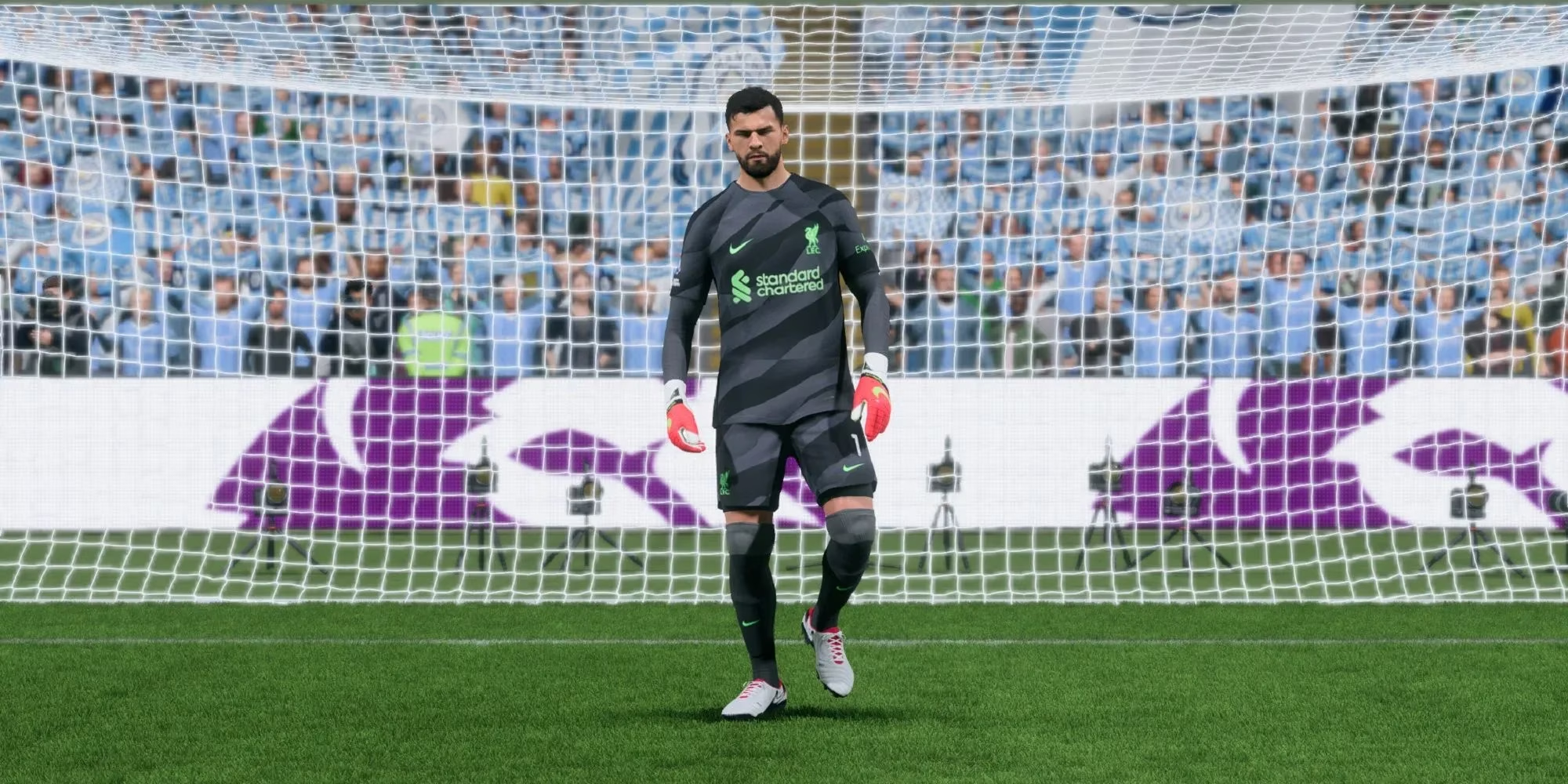
As a gaming journalist who plays hundreds of titles annually, I've learned it's impossible to love every game. When Final Fantasy 7 Remake's combat failed to click with me, I walked away without hesitation, knowing I'd miss Cloud and Tifa's heartfelt moments but sparing myself the grind. Yet some games—like EA Sports FC 24—embed themselves like stubborn thorns. They irritate me with inconsistent gameplay, predatory matchmaking, and shop-focused events screaming for microtransactions. I quit last November, exhausted by its demands, yet I constantly wonder: why do millions still endure this frustration daily?
The Relentless Grind of Modern Gaming
EA FC isn't alone in this maddening dance. Take Apex Legends—a game I've poured 1,200 hours into since 2025. Each season brings recycled content, overpriced $700 heirlooms, and cheater-infested ranked lobbies that sour victories. Servers stutter like old machinery, yet I return like a moth to flame. Why? Because beneath the broken systems lies exhilarating gunplay and squad dynamics that few competitors match. Still, the scales tip toward frustration: 70% of my Discord chats overflow with complaints about lag, paywalls, and stale metas.

The Live-Service Quicksand
This isn't just about EA or Respawn; it's a pandemic. Rocket League’s lootbox controversies, Destiny 2’s vaulted content, Overwatch 2’s abandoned promises—all trap players in identical loops. Unlike single-player adventures where quitting is clean (remember abandoning that tedious RPG side quest?), live-service games weaponize FOMO. That limited-time EA FC event? It whispers, "Grind for packs or miss out forever." I’ve wasted weekends chasing Liverpool player evolutions, ignoring my backlog, enslaved by digital carrots.
People Also Ask: Why can’t players quit these frustrating games?
-
Answer: We’re psychologically wired to fear missing rewards, and developers exploit this by designing endless treadmills. Stopping feels like surrendering progress.
-
Answer: Social pressure compounds it—your squad expects you online for Apex ranked nights, creating guilt-driven logins.
The Hollow Victory Syndrome
After 1,000 hours in any live-service title, flaws magnify into glaring cracks. Winning an Apex match delivers fleeting dopamine, but it never matches the seismic rush of finally toppling Elden Ring’s Malenia after 50 tries. Why? Because live-service games replace meaningful progression with cosmetic trinkets and stat tweaks. Your hard-earned EA FC striker evolves marginally faster; your Apex heirloom changes zero gameplay. Meanwhile, single-player masterpieces like Baldur’s Gate 3 make every battle a story crescendo, where defeating a once-impossible boss echoes for hours.

Reclaiming Our Joy
Enough. I’ve started enforcing a simple rule: if a game annoys me for three consecutive sessions, I uninstall it. Since applying this in early 2025, I’ve rediscovered gems like Hollow Knight and Stray—games that respect my time and imagination. My advice? Audit your playtime. Ask brutally: "Is this fun or obligation?" Break the cycle; your mental health will bloom.
People Also Ask: How do live-service games differ from single-player ones psychologically?
- Answer: Live-service titles are digital casinos, dangling rewards to trigger addiction loops, while single-player games are novels—consumed at your pace, with cathartic closure.
A Future Worth Fighting For
Five years from now, I dream of a gaming landscape where live-service means "living world," not "endless monetization." Imagine Apex Legends events that expand lore through play, not paywalls, or EA FC focusing on responsive gameplay over card packs. As players, we must demand better—support studios like Larian that prioritize artistry over algorithms. Games should be escapes, not second jobs. Let’s build that future, one uninstall at a time.